
SIMPLY FILL OUT THE FORM AND WE’LL SEND a Vinyl panel YOUR WAY
Get a Free SampleBetween delaminating FRP seams caught by a health inspector, soft drywall, or persistent odor, failing walls were a constant headache for me. I sat back and questioned myself: “How much has that wall actually cost me over the past three years?” To make things worse, it was not just the repair invoice. The labor hours, inspection anxiety, and downtime all added up to my facility’s expenses and my despair. I am Ryker Martinez, an industrial warehouse manager currently based in Boston. After a failed inspection, I decided to make a strong call and replace the industrial interior wall panels with PVC.
Core Problem I was Dealing with Conventional Wall Panels
Before switching to commercial PVC wall panels, I had my failed experiences with both drywall and FRP panels. My observation is that these traditional panels come with built-in vulnerabilities that inevitably surface in demanding commercial environments. Moisture is the root of most failures. Because neither drywall nor FRP is truly water-resistant, moisture penetration eventually leads to mold, structural rot, and costly remediation. Commercial PVC wall panels were engineered to address exactly these failure points.
PVC Wall Panels vs. Drywall vs. FRP Panels: Side-by-Side
Based on my professional encounter with three available wall panels across the USA, here is a side by side comparison of PVC panels, drywall, and FRP.
| Feature | Drywall | Commercial PVC Panels | FRP panels |
| Moisture resistance | Absorbs water even when painted | Inherently moisture-resistant due to their non-porous surface | Water seeps through, rotting the wood backer boards |
| Mold risk | High risk of mold growth inside the wall cavity | Seamless finish prevents mold and mildew traps | Exposed joints and trim pieces trap contaminants |
| Cleanability | Surface degrades under harsh cleaners and chemicals | Stain-resistant and stands up to daily washdowns | High maintenance and textured finish is difficult to clean |
| Installation | Labor-intensive and multistep mudding and tapping process | Lightweight, interlocking, tongue and groove design | Requires adhesive, backers, and face-mounted rivets |
| Impact resistance | Prone to dent, crack, or peel from equipment | High-impact durability resists everyday wear and tear | Crack, peel, or puncture from daily operations |
| Compliance | Unsuitable for strictly regulated environments | CFIA and FDA compliant | Uneven surface can fail strict health inspections |
With over 20 years of experience in warehouse management, I understand that drywall is essentially a residential building product pressed into commercial use. It was never built to meet the hygiene demands or withstand the physical abuse of an industrial or commercial environment. The same goes with FRP panels. Although they are a step up from drywall, their structural and hygiene limitations turned them into an operational liability. This is where I found that commercial PVC walls provide me with a distinct operational advantage.
What I Value as a Facility Manager in the USA
Beyond the spec sheets, I have three operational metrics when choosing wall panels for a warehouse:
- Minimized downtime
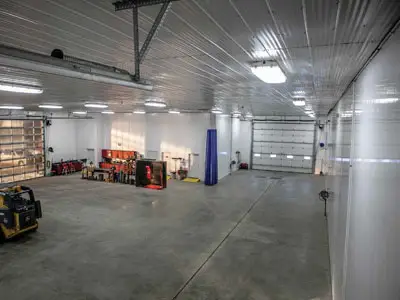
While setting up FRP and drywall is complicated and time-consuming, installing PVC panels over an existing surface is fast. When I upgraded the warehouse’s interior with PVC panels, I achieved fewer labor hours, less operational disruption, and a faster return to full use.
- Audit confidence
In regulated industries like ours, the wrong wall material can trigger a failed inspection and a forced shutdown. I had a first-hand experience of that. PVC panels gave me the audit confidence as they are FDA-compliant and carry a Class 1 fire rating to meet health and safety codes.
- Total cost of ownership
Over a 10-year period, including maintenance, repairs, mold remediation, and replacement, PVC panels consistently cost significantly less. Our last renovation, when I replaced the drywall in my warehouse with PVC, was 11 years ago, and over the years, I have observed a drop in overall maintenance expenses.
Answering Questions My Fellow Facility Managers Ask About Commercial PVC Wall Panels
Are PVC wall panels suitable for commercial kitchens and food processing facilities?
Yes. High-quality commercial PVC panels are FDA and CFIA-compliant, with smooth, non-porous surfaces that are easy to clean and sanitize. They’re specifically designed for high-humidity, high-hygiene environments where drywall and FRP consistently fail.
How long do commercial PVC wall panels last compared to FRP?
Duramax PVC panels last up to four times longer than traditional FRP panels. Unlike FRP, they don’t delaminate, crack, or absorb moisture over time, which eliminates the repair and replacement cycles that drive up FRP’s long-term cost.
Can PVC panels be installed over existing drywall or FRP?
Yes. One practical advantage of PVC panels is that they can be installed directly over existing wall surfaces using studs and fasteners, without requiring full demolition. This significantly reduces installation time and labor costs.
Are commercial PVC wall panels fire-rated?
Duramax industrial interior wall panels have a Class 1 fire rating, making them suitable for regulated commercial and industrial environments where fire code compliance is mandatory.
What industries use commercial PVC wall panels the most?
PVC wall panels are widely used in warehouses, commercial kitchens, food and beverage processing, pharmaceutical and cleanroom facilities, agricultural buildings, car wash bays, healthcare environments, cold storage, and warehouse utility spaces.
My Suggestion: Upgrade Your Facility With Duramax PVC Panels
My decision to switch to commercial PVC walls was backed by a failed hygiene inspection. But you should not wait for a similar humiliation and stress. By patching drywall or replacing failed FRP panels, you will likely spend too much time and money . Duramax panels are engineered for the exact high-stress environments where traditional materials fail. Facility managers like me, who make the switch, rarely look back. Explore how these panels can protect your walls from demands they currently can’t handle. Request a free sample by visiting the Duramax website.
Duramax PVC Panels vs FRP – Key Advantages
No Mold, No Rot: Unlike FRP, Duramax PVC Panels won’t support mold or mildew growth.
Easy Installation: Interlocking design means no backer boards, no glue, and no extra labor.
100% Waterproof: PVC panels are completely water-resistant, ideal for high-moisture areas.
Low Maintenance: No peeling, bubbling, or cracking—just wipe clean with ease.
Cost-Effective Over Time: No need for replacement or repainting like with FRP.
Certified Performance You Can Trust

ASTM Certified: Tested for strength, durability, and environmental performance.

FDA-Compliant: Safe for use in food-processing and sanitary environments.

Class A Fire-Rated: Designed with fire safety as a top priority.

Made in the USA: Quality assured, with faster delivery and dependable service.
Related Blogs
- How Nina’s Garage Makeover With Commercial PVC Wall Panels Helped R...
- Top Applications Of Commercial Vinyl Wall Covering in 2026
- Why Shop For Commercial PVC Wall Panels From Duramax?
- Can Commercial PVC Wall Panels Handle Daily Cleaning and Pressure W...
- 5 Signs David’s Commercial Facility Needed a Smarter Wall Paneling
Recent Blogs
- Does Moisture-Proof Wall Paneling Reduce Repair and Maintenance Costs?
- How Do Garage PVC Wall Panels Compare To Traditional Wall Panels?
- What Are The Hidden Disadvantages Of FRP Wall Panels?
- FRP vs PVC Panels-Which is the Right Fit for Modern Commercial Kit...
- How Nina’s Garage Makeover With Commercial PVC Wall Panels Helped R...
Place your order – Request for a quote:
Duramax panels are ASTM-certified, FDA-compliant, quality-checked, Class A fire-rated per ASTM E84, and chemical-resistant.
As a trusted wall panel supplier in the USA, Duramax makes it easy to get started. Request a free sample, book a free consultation, or get your quote today.
Have a question? Tell us how we can help.
Sign up for updates and news