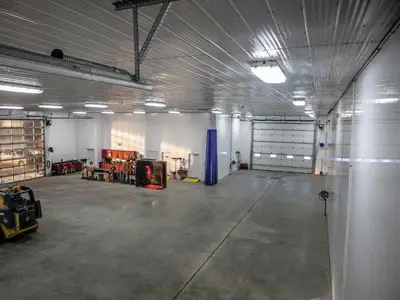
FRP and PVC wall panels are used in commercial and industrial environments where durable, cleanable wall surfaces are required. Car wash facilities present additional challenges because of continuous water exposure, high-pressure spray, vehicle cleaning chemicals, detergents, moisture, humidity and frequent washdowns. This guide compares FRP and PVC wall panels for car wash facilities, including installation, cleaning, moisture resistance, chemical compatibility, durability, maintenance and total installed cost, to help car wash owners, contractors and commercial facility managers select an appropriate wall-panel system.
| Feature | FRP Wall Panels | PVC Wall Panels |
|---|---|---|
| Moisture Resistance | Resistant to moisture; performance depends on the complete installed system and backer board | Waterproof PVC panel materials can help prevent water absorption through the panel itself |
| High-Pressure Washdown | Suitability depends on the panel system, joints, backing and installation | Suitable only where the selected product and installation system are rated for the actual spray exposure |
| Hygiene & Cleanability | Washable surface; textured finishes and trim joints may collect dirt and residue | Smooth surfaces can facilitate removal of dirt, soap residue and water spots |
| Chemical Resistance | Resistance varies by resin type, panel thickness and cleaning products | Resistance varies by PVC formulation and the chemicals used |
| Soap & Detergent Residue | Textured finishes and seams may require additional cleaning | Smooth surfaces can simplify routine removal of detergent and grime |
| Mold & Mildew | Moisture behind susceptible backer boards can cause deterioration | Moisture-resistant panel construction can help protect walls, but joints and wall assemblies must be properly designed |
| Impact Resistance | Performance depends on panel thickness and product construction | Performance depends on panel construction and intended commercial use |
| Installation | Traditional systems commonly require adhesive, trims and a suitable backing surface | Some systems allow mechanical fastening and tongue-and-groove interlocking without backer board |
| Maintenance | Requires routine cleaning and inspection of seams, trims and caulk | Routine cleaning can be straightforward; joints, fasteners and perimeter seals still require inspection |
| Long-Term Value | Lower initial panel cost may be offset by backing, installation and maintenance expenses | Initial material cost may be higher, with potential savings depending on installation and upkeep |
| Best Applications | Commercial areas where FRP meets the facility's moisture and chemical requirements | Wet commercial environments where the selected PVC system is suitable for the actual operating conditions |
FRP stands for Fiberglass-Reinforced Plastic. It is a composite wall panel manufactured by embedding glass fibers into a polymer resin matrix, typically polyester or vinyl ester. The result is a lightweight, rigid sheet used to provide surface protection and impact resistance in commercial and industrial environments.
Construction and Common Utility
FRP panels are widely used in commercial interiors, including kitchens, restrooms, food storage areas, utility rooms and other spaces requiring washable wall finishes. They can provide a protective surface over structural walls, but their suitability for wet environments depends on the complete installation system.
Typical Car Wash Applications
In car wash facilities, FRP panels may be considered for equipment rooms, service areas, detailing spaces and other commercial interiors where washable wall protection is needed. For direct-spray wash bays, panel specifications, backing materials, joint sealing and chemical compatibility should be checked carefully.
Substrate Requirements
FRP panels are typically thin and flexible and require a suitable backing surface, such as water-resistant drywall, plywood or OSB, according to the manufacturer's instructions.
Adhesive Application
A compatible adhesive may be required across the backing surface.
Trims & Moldings
Panels are installed with appropriate expansion gaps and finished with division bars, end caps and corner trims.
Seam Sealing
Joints and transitions must be sealed according to the installation specifications to reduce the risk of water entering behind the panels.
Cleaning and Maintenance Considerations
FRP surfaces can be washed, but textured finishes may require additional attention when removing road grime, grease, detergent residue and mineral deposits. Seams, trim pieces and sealants should be inspected routinely, especially in areas exposed to repeated washdowns.
PVC (Polyvinyl Chloride) wall panels are extruded wall cladding manufactured from vinyl resins. Commercial PVC wall systems like Duramax PVC Panels feature rigid construction, with product designs that may include a hollow-core webbed structure or solid rigid profiles made from virgin vinyl.
Waterproof Panel Construction
PVC panel materials can resist water absorption through the panel itself. The performance of the complete installed system depends on joints, penetrations and perimeter sealing.
Smooth Finish
Smooth surfaces can facilitate routine removal of dirt, soap residue and other surface contaminants.
Interlocking Tongue-and-Groove System
Some systems can be mechanically fastened to wall studs or suitable existing wall assemblies without backer board or surface-applied adhesive.
Chemical Resistance
Resistance varies by formulation and must be verified against the detergents, waxes, degreasers and other chemicals used at the facility.
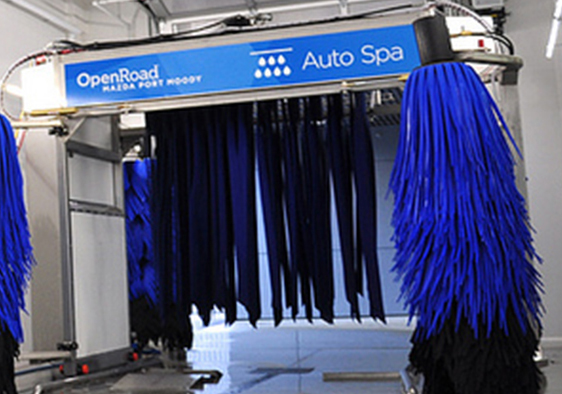
Duramax PVC wall panels can be evaluated for car wash projects where moisture resistance, cleanability and installation efficiency are priorities. Review the official Duramax PVC Product Specifications to confirm whether a particular panel is appropriate for the intended application.
Car wash facilities feature wall areas exposed to water spray, cleaning chemicals, vehicle movement and regular washdowns. Choosing an appropriate installation system is important for project timelines, wall protection and long-term maintenance.
Installing FRP requires careful coordination:
Duramax PVC panels use a mechanical fastening method designed to simplify installation:
| Installation Step | FRP Panels | Duramax PVC Panels |
|---|---|---|
| Backer Board Needed | Typically required, depending on the installation system | May not be required for approved direct-to-stud installations |
| Adhesive Required | Commonly required for traditional installations | Not required for approved direct mechanical fastening |
| Fastener Visibility | Depends on the adhesive and fastening method | Fasteners can be concealed within the tongue-and-groove fastening lip |
| Cutting Considerations | Fiberglass dust precautions may be necessary | Standard woodworking cutting procedures may be used according to product instructions |
| Cure Time | Adhesive curing may be necessary | No adhesive curing period where direct mechanical fastening is used |
| Labor Requirement | Multiple preparation and finishing steps may increase labor | Interlocking installation may reduce installation steps and labor |
Because Duramax PVC panels can eliminate the need for backer boards and adhesives in approved installations, they may reduce installation time compared with traditional FRP systems. Actual savings depend on wall conditions, the wash bay layout, product specifications and installer experience.
Car wash facilities expose wall surfaces to road grime, dust, grease, soap, wax, detergents, mineral deposits and frequent water spray. Commercial wash bays may also use specialized vehicle-cleaning products and concentrated chemical solutions.
FRP (Textured Surface)
Textured finishes may require additional scrubbing to remove grime and detergent residue. Trim joints and caulked seams need regular inspection.
PVC (Smooth Surface)
Smooth surfaces can facilitate removal of soap residue, dirt and water deposits during routine cleaning.
Surface Smoothness
Traditional FRP may feature a pebble-grain or textured finish. Surface texture can make some residues harder to remove. Smooth PVC surfaces can simplify routine wiping and washing when compatible cleaning methods are used.
Joint Design
FRP installations often use external trim pieces and sealed seams. Interlocking PVC systems can reduce exposed panel-joint detailing, but perimeter transitions and penetrations still require appropriate sealing.
Routine Maintenance
Cleanable wall surfaces help maintain a professional-looking wash bay. The cleaning schedule should account for the chemicals used, the amount of vehicle grime and the frequency of direct water exposure.
Car wash facilities routinely handle water spray, high humidity, splashes, wet floors and condensation. In enclosed wash bays, warm water and temperature differences can increase moisture exposure on wall surfaces and behind wall cladding.
FRP panels resist moisture, but the complete installation depends on the backing material, joints and sealants. If water enters behind the panels, susceptible substrates may deteriorate over time.
Waterproof PVC panel materials resist water absorption through the panel itself. A properly selected and installed PVC system can help reduce moisture-related wall maintenance, but water may still enter through inadequately sealed joints, penetrations or transitions.
For direct-spray wash bays, verify that the selected wall-panel system is approved for the actual water pressure, spray distance, temperature and cleaning conditions. Proper drainage, ventilation, corrosion-resistant fasteners and sealing details are important to the performance of the complete wall assembly.
Commercial car wash operations may use a variety of vehicle-cleaning and maintenance chemicals, including:
Detergents and Soaps
Products used to remove dirt, dust and road grime.
Alkaline Cleaners and Degreasers
Formulations used for heavier soil and grease removal.
Acidic Cleaners
Products used to address mineral deposits and specific surface contaminants.
Waxes and Finishing Products
Chemicals used during vehicle finishing and protection processes.
Disinfectants and General Cleaners
Products used for equipment and facility maintenance where applicable.
Both vinyl formulations and fiberglass resin matrices can offer chemical resistance, but performance depends on the chemical composition, concentration, temperature, contact time and frequency of exposure.
Before selecting FRP or PVC wall panels, review the manufacturer’s chemical compatibility documentation for the products used in the car wash. Confirm that the panel, trims, sealants and fasteners are suitable for the facility’s cleaning protocol. Do not assume that a panel is compatible with every concentrated degreaser, acidic cleaner or vehicle-care chemical.
FRP System:
FRP can provide durable wall protection, but damaged seams or worn sealants may allow moisture to reach the backing material.
Duramax PVC System:
PVC panels can provide a moisture-resistant wall surface. Long-term performance depends on the panel construction, installation quality, chemical exposure and maintenance.
Impact Resistance:
Both FRP and PVC systems should be evaluated for impacts from hoses, cleaning equipment, carts, vehicle doors and everyday activity.
Scratching & Staining:
Resistance varies by product and finish. Confirm the selected panel's suitability for expected abrasion, cleaning and chemical exposure.
Long-Term Joint Maintenance:
FRP installations may require periodic inspection and re-sealing. Interlocking PVC systems can reduce continuous sealant requirements along panel joints, but perimeter seals, trims and penetrations still need inspection.
Evaluating wall-panel systems based solely on sheet material pricing provides an incomplete financial picture. Total cost analysis should account for substrate materials, adhesives, trims, fasteners, labor hours, maintenance and potential repairs caused by moisture exposure.
| Expense Category | FRP Panel System | Duramax PVC Wall System |
|---|---|---|
| Raw Panel Cost | Often lower upfront sheet cost, depending on product | May involve a higher upfront material investment, depending on product |
| Substrate / Backer Board | Required when specified by the installation system | May not be required for approved direct-to-stud installations |
| Adhesive / Trowels | Commonly required for traditional adhesive installation | Not required for approved direct mechanical fastening |
| Fasteners & Trims | Trim moldings, fasteners where required and compatible sealant | Compatible mechanical fasteners, starter profiles and matching trims |
| Labor Hours | Multiple preparation and adhesive steps may increase labor | Direct fastening and interlocking may reduce installation steps |
| Maintenance & Repairs | Periodic seam inspection, caulk repair and possible substrate repairs | Routine cleaning and inspection of joints, trims and fasteners |
| Total Lifetime Cost | Depends on material, labor, backing and maintenance | Depends on material, installation savings and ongoing maintenance |
Larger wash bays may benefit from installation systems that reduce preparation and finishing steps.
Damaged or moisture-sensitive substrates may need repair or replacement. Direct-to-stud systems may reduce backer-board requirements when approved.
Plumbing, electrical services, hose reels, equipment openings and access doors can increase trim and sealing requirements.
Contractor availability and labor costs influence the total installed price.
High-pressure spray, temperature, chemical exposure and operating frequency may affect the product specification and maintenance plan.
| Installation Factor | FRP Panels | Duramax PVC Panels |
|---|---|---|
| Surface Preparation | Typically requires a suitable, flat backing surface | May mount over open studs or existing wall structures when approved for the product |
| Cutting Tools | Suitable shears or saws; fiberglass dust precautions may be required | Standard woodworking tools may be used according to the installation guide |
| Adhesive Requirements | Commonly requires compatible adhesive | Not required for approved direct mechanical fastening |
| Panel Joining | External division strips or trim moldings | Concealed tongue-and-groove interlock |
| Corner Finishing | Inside and outside corner trim moldings | Matching PVC perimeter and corner trim profiles |
| Seam Treatment | Sealant is applied where required by the system | Interlocking design with perimeter sealant where specified |
| Installation Speed | Multiple preparation and adhesive steps may increase installation time | Direct fastening and interlocking may simplify installation |
| Installer Experience | Requires familiarity with FRP adhesive application and trim systems | Requires familiarity with mechanical fastening, panel interlocking and trim profiles |
| Final Inspection | Inspect adhesive bonds, bubbles, seams and caulk integrity | Inspect fasteners, interlock engagement, perimeter sealing and trim installation |
Car wash facilities may be subject to building codes, fire-safety requirements, electrical safety rules, drainage requirements and environmental regulations governing wash water and chemical handling. Applicable requirements depend on the facility and jurisdiction.
| Car Wash Facility Area | Key Wall Requirements | System Suitability |
|---|---|---|
| Automatic Car Wash Bays | Water spray, detergent exposure and frequent cleaning | PVC or FRP only where the selected system is suitable for the actual washdown conditions |
| Self-Service Wash Bays | Repeated direct spray, cleaning chemicals and impact exposure | Verify water-pressure ratings, chemical compatibility and joint sealing |
| Tunnel Car Washes | Continuous moisture, equipment movement and routine washdowns | Select a system designed for the exposure and operational conditions |
| Vehicle Detailing Areas | Cleanable walls, resistance to detailing products and a professional appearance | Smooth PVC or suitable FRP based on chemical compatibility |
| Pre-Wash & Preparation Areas | Road grime, degreasers, water and detergent splashes | Evaluate the panel system against actual cleaning products and spray exposure |
| Equipment Rooms | Moisture management, service access and general wall protection | FRP or PVC depending on humidity, chemical exposure and code requirements |
| Drying & Finishing Areas | Cleanability, splash protection and routine maintenance | FRP or PVC depending on moisture levels and finishing chemicals |
| Storage & Utility Areas | Scuff resistance and basic cleanability | Standard FRP cladding or PVC wall panels where appropriate |
PVC wall panels are worth evaluating when a car wash facility requires a durable, moisture-resistant wall surface and straightforward routine maintenance. For projects with repeated washdowns, wet operating conditions, demanding cleaning schedules or tight installation timelines, an appropriate mechanical-fastening PVC system may offer practical advantages.
Before selecting PVC for a direct-spray wash bay, confirm the panel’s suitability for the actual water pressure, cleaning chemicals, temperature, impact exposure and installation method. Proper sealing, drainage, ventilation and compliance with fire and building codes remain essential.
Duramax panels feature a smooth, non-porous finish that can facilitate routine removal of dirt, soap residue and other surface contaminants. Follow the manufacturer’s cleaning guidance to maintain the panel finish.
Duramax PVC wall panels are manufactured from virgin vinyl. Their moisture-resistant panel construction can help protect wall surfaces in wet environments. Proper joint sealing, drainage and ventilation remain important to the performance of the complete installation.
When approved for the project, Duramax panels can be installed directly to studs or suitable existing structures using concealed fasteners. This can eliminate the need for OSB backer board and surface-applied adhesive, reducing installation steps.
Duramax panels feature an internal webbed truss structure designed to provide rigid wall protection. Choose a panel system based on the expected impacts from hoses, carts, cleaning equipment and daily vehicle-wash operations.
Duramax provides factory-direct ordering across the United States, with project support to help commercial buyers evaluate panel quantities, installation needs and shipping requirements.
Fast sample dispatch
Custom panel length options to help reduce project waste
Dedicated project specialists for material estimatesExplore full product specifications on the official Duramax PVC Wall Panels website.
There is no single wall-panel material that is automatically right for every car wash facility. FRP and PVC systems should be evaluated based on water pressure, moisture exposure, cleaning chemicals, impact risks, temperature conditions, installation requirements, fire-rating requirements, applicable regulations and total installed cost. For projects where a PVC system meets these requirements, Duramax PVC panels can be evaluated as an alternative to traditional FRP.
PVC wall panels may be suitable for certain car wash areas where moisture resistance and cleanability are important. For direct-spray wash bays, verify that the selected panel and complete installation system are approved for the water pressure, chemicals and operating conditions.
FRP panels may be appropriate for equipment rooms, detailing areas and other commercial spaces. For wet wash bays, check the complete installation system, including backing material, joints, sealants and chemical compatibility.
The better option depends on the specific product and operating conditions. PVC systems may offer installation advantages where direct mechanical fastening is approved, but both materials must be evaluated for spray pressure, chemical exposure, joint sealing and durability.
Chemical resistance varies by PVC formulation and by the concentration, temperature and exposure duration of each product. Check the manufacturer’s compatibility documentation for soaps, waxes, degreasers, acidic cleaners and other vehicle-care chemicals.
Waterproof or moisture-resistant wall systems can be beneficial in areas exposed to repeated water spray and frequent cleaning. The complete installation must also address joints, penetrations, drainage, ventilation and any water that could reach the supporting structure.
Basic FRP sheets may have a lower initial material cost. However, total installed cost also includes backing, adhesives, trims, labor and maintenance. PVC systems may reduce installation steps in approved direct-fastening applications, but a project-specific estimate is needed to compare costs accurately.
PVC may be an alternative to FRP where the selected product meets the project’s water-exposure, chemical-resistance, impact, fire-rating and code requirements. Verify suitability for direct-spray wash bays before making a substitution.
For approved Duramax installations, panels use a concealed fastening lip secured to the supporting structure with suitable fasteners. Adjacent panels interlock through a tongue-and-groove joint. Follow the product installation guide for framing, fasteners, expansion gaps, trims and perimeter sealing.
Use the cleaning methods and products approved by the panel manufacturer. Routine maintenance may include washing with water and compatible detergents. Confirm chemical compatibility before using concentrated degreasers, acidic cleaners or other specialized vehicle-care products.
Key factors include water pressure, frequency of washdowns, chemical compatibility, moisture management, impact resistance, installation requirements, fire ratings, drainage and total installed cost. The suitability of the panel system for the specific wash bay should be confirmed before installation.
Compare your facility requirements with Duramax PVC wall panels and determine whether they are an appropriate alternative to traditional FRP for your commercial car wash, detailing facility or vehicle wash bay.
"*" indicates required fields