SIMPLY FILL OUT THE FORM AND WE’LL SEND a Vinyl panel YOUR WAY
Get a Free SampleThe behind-the-scenes reality of a thriving commercial kitchen is a high-octane mix of intense heat, airborne grease, chemical washdowns, and relentless foot traffic. In this challenging environment, interior wall surfaces must remain intact to maintain strict sanitation standards. For years, fiber-reinforced plastics were considered the most common choice for food preparation facilities. As kitchen operations involve faster turnarounds, lower maintenance costs, and compliance with health and safety codes, FRP wall panels are facing scrutiny.
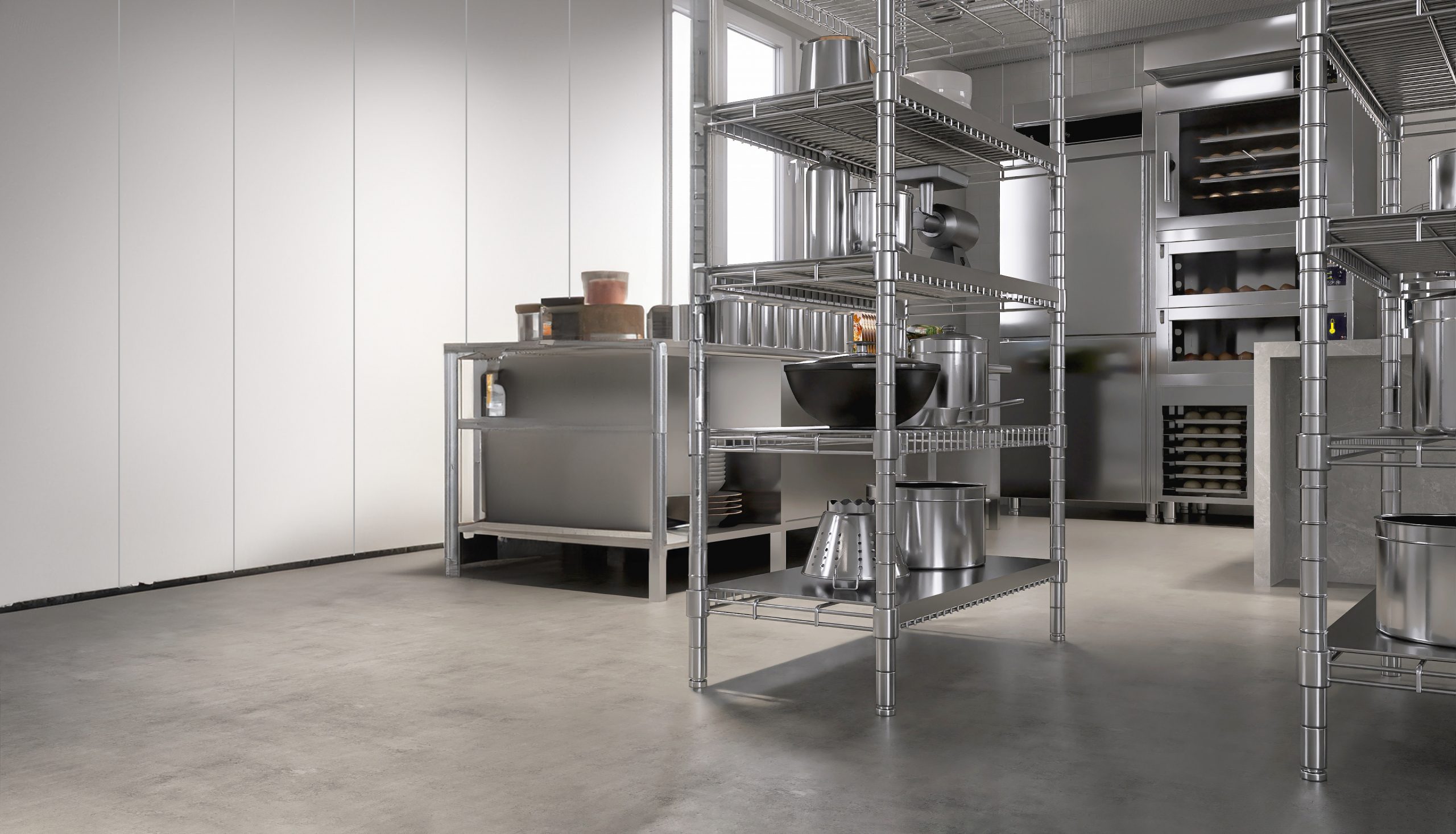
When bacterial infestation and health inspections collide, choosing the right wall materials can mean the difference between smooth daily operations and costly shutdown risks. Vinyl commercial kitchen wall panels are a modern, high-performance alternative that challenges FRP’s status. When comparing FRP vs. PVC panels, which material truly earns its place in modern commercial kitchens? Let us break down the performance, installation, and long-term cost of both options.
Understanding the Contenders- FRP vs. PVC Panels
Before you make an informed decision, it is important to understand how these two popular wall cladding materials differ in composition and installation mechanics.
- Fiber-Reinforced Plastics– FRP consist of thin plastic sheets reinforced with glass fibers. Since these sheets are thin and flexible, they cannot be directly installed onto wall studs. Installing FRP requires solid wooden backer boards, heavy adhesives, and surface-mounted rivets to hold it in place.
- PVC Panels– PVC wall panels are rigid, lightweight structures engineered with an inner truss design. Made from 100% virgin vinyl, these panels don’t require wooden backers or messy glue. Tongue-and-groove interlocking systems help PVC panels fasten directly to studs, creating a smooth, seamless surface.
Key Performance Metrics at a Glance
1. Moisture & Mold-Resistance
In a high-steam kitchen environment, humidity is the persistent problem. While FRP panels are moderately moisture-resistant, wooden backer boards make FRP more susceptible to moisture absorption. Moisture can easily seep through seams, degrading sealants and causing the wooden backers to rot, swell, and harbor hidden mold growth.
In contrast, vinyl commercial kitchen wall covering is a 100% moisture-resistant wall material. These non-porous materials prevent moisture from reaching the underlying substrate. Since there is no organic material to absorb moisture, it leaves no scope for fungal and mold growth.
2. Sanitation and Surface Maintenance
FRP wall panels feature a textured surface that can trap oil droplets, grease, and food residue over time. Scrubbing textured FRP surfaces requires specialized cleaning, and damaged sealant around joints creates crevices where bacteria thrive.
PVC wall and ceiling panels have a non-porous finish where liquid and grease can slide off without sinking in. Staff can easily pressure wash or wipe down walls with standard sanitizers, reducing cleaning time and ensuring compliance with FDA and USDA standards.
3. Impact Resistance and Durability
Commercial kitchens are busy, high-impact environments where heavy carts, metal pans, and cooking equipment frequently bump against walls. When FRP sustains a hard hit, the outer sheet delaminates from the backer board, exposing glass fibers and creating irreparable surface damage.
PVC wall panels feature an internal webbed truss design that absorbs heavy physical impacts. They resist denting, cracking, and scratching, maintaining structural integrity even under constant daily wear and tear.
4. Fire Safety Performance
Safety regulations for commercial kitchens require strict adherence to fire safety codes because of the high-heat cooking equipment. Traditional FRP panels, made with resins, burn rapidly and produce heavy smoke when exposed to high heat or flame.
Commercial-grade vinyl panels are naturally self-extinguishing and carry a Class A fire rating. They are tested under ASTM E84 standards, adding an extra layer of safety in high-heat commercial kitchens.
5. Total Cost of Ownership and Installation Efficiency
While FRP wall panels may seem affordable at first, installation adds costs for backer boards, glue, trim, and multi-person labor. The recurring repairs and re-caulking add to maintenance expenses.
On the other hand, the initial cost of PVC panels is slightly higher than FRP. However, the impressive lifespan and easy installation make PVC panels a cost-effective option. The direct-to-stud interlocking design makes installation easy without wooden backers, adhesives, taping, or lamination.
Real-World Case Study-Redefining Commercial Kitchen with Duramax Vinyl Panels
Kitchen Name-The Olive Leaf & Catering Co.
Facility Manager– Steve Hawk
Kitchen Size-3,500 sq. ft.
Problem
After five years of heavy daily use, Steve faced severe wall deterioration in the prep and dishwashing zones of The Olive Leaf’s 3,500 sq. ft. kitchen. The existing FRP panels were warping, and moisture had seeped behind the sheets, causing the backing boards to swell. Mold growth behind the prep stations triggered a warning during a routine health department inspection. Steve was facing an imminent closure if the walls were not completely repaired.
Solution
Steve replaced the damaged FRP with Duramax Vinyl Industrial Kitchen Wall Systems. The team removed the damaged FRP and rotted wood backing, then installed 1/2-inch thick interlock PVC panels directly onto the wall studs and ceiling joists.
Result
The team completed the entire 3,500 sq. ft. installation in just two days. The Olive Leaf saved approximately 45% on labor costs and resumed kitchen operations ahead of schedule. Three years later, the kitchen walls remain mold-free, stain-resistant, and effortless to sanitize, passing every health inspection with flawless scores.
Q/A
1. Why are PVC panels more hygienic than FRP for kitchens?
PVC panels feature a non-porous, smooth surface joined together with seamless interlocking edges. Unlike FRP, which rely on trim strips, and caulk line joints that trap dirt and bacteria, PVC panels eliminate the need of wooden backers that could harbor mold growth. This makes sanitization fast and effortless.
2. Do PVC panels need a backer board?
No. Unlike FRP sheets, which require plywood backer boards, vinyl panels are the opposite. They feature an internal truss design that provides structural rigidity. They screw directly into wall studs or ceiling joists, eliminating extra material costs and removing the risk of hidden wood rot.
3. How do PVC panels perform in a damp kitchen?
PVC panels are water-resistant, meaning they will not absorb moisture, swell, or delaminate when exposed to heavy steam, boiling liquids, or high-pressure hose washdowns.
Make a Smart Choice with Duramax Vinyl Panels
Duramax offers vinyl industrial kitchen wall systems that balance durability and modern aesthetics. They come with a limited lifetime warranty and cover your labor costs up to $25,000. Duramax Vinyl Panels come in 8, 10, 12, 14, 16, and 20 ft lengths. We ship vinyl panels to your destination within two weeks.
Request a free project consultation now.
Duramax PVC Panels vs FRP – Key Advantages
No Mold, No Rot: Unlike FRP, Duramax PVC Panels won’t support mold or mildew growth.
Easy Installation: Interlocking design means no backer boards, no glue, and no extra labor.
100% Waterproof: PVC panels are completely water-resistant, ideal for high-moisture areas.
Low Maintenance: No peeling, bubbling, or cracking—just wipe clean with ease.
Cost-Effective Over Time: No need for replacement or repainting like with FRP.
Certified Performance You Can Trust

ASTM Certified: Tested for strength, durability, and environmental performance.

FDA-Compliant: Safe for use in food-processing and sanitary environments.

Class A Fire-Rated: Designed with fire safety as a top priority.

Made in the USA: Quality assured, with faster delivery and dependable service.
Related Blogs
- Duramax Restaurant Kitchen Walls Are A Breakthrough With Unexpected...
- No More Maintenance Worries: Upgrade to PVC Commercial Kitchen Wall...
- Sick And Tired Of The Hidden Costs? Now Its Time For Affordable PV...
- How Does Implementing PVC Panels Help Keep Commercial Kitchens in T...
- Which Features of Commercial Kitchen Wall Covering Are the Most Tal...
Recent Blogs
- How Nina’s Garage Makeover With Commercial PVC Wall Panels Helped R...
- Can PVC Kennel Wall Panels Reduce Maintenance Costs?
- Clara’s Cannabis Business Spiked Profit As Grow Room Vinyl Panels S...
- Duramax Vinyl Panels for Car Washes- Where Protection Meets Perform...
- Why More Data Centers Are Choosing Vinyl Wall Coverings Today?
Place your order – Request for a quote:
Duramax panels are ASTM-certified, FDA-compliant, quality-checked, Class A fire-rated per ASTM E84, and chemical-resistant.
As a trusted wall panel supplier in the USA, Duramax makes it easy to get started. Request a free sample, book a free consultation, or get your quote today.
Have a question? Tell us how we can help.
Sign up for updates and news