Chat with us, powered by LiveChat

FRP and PVC wall panels are both used in food-processing and other demanding commercial environments where durable, cleanable wall surfaces are required. Dairy facilities can present additional challenges because of frequent washdowns, moisture, condensation, food residues, cleaning chemicals and strict hygiene requirements. This guide compares FRP and PVC wall panels for dairy facilities, including installation, cleaning, moisture resistance, durability, maintenance and total installed cost, to help facility owners, contractors and food-processing professionals select an appropriate wall-panel system.
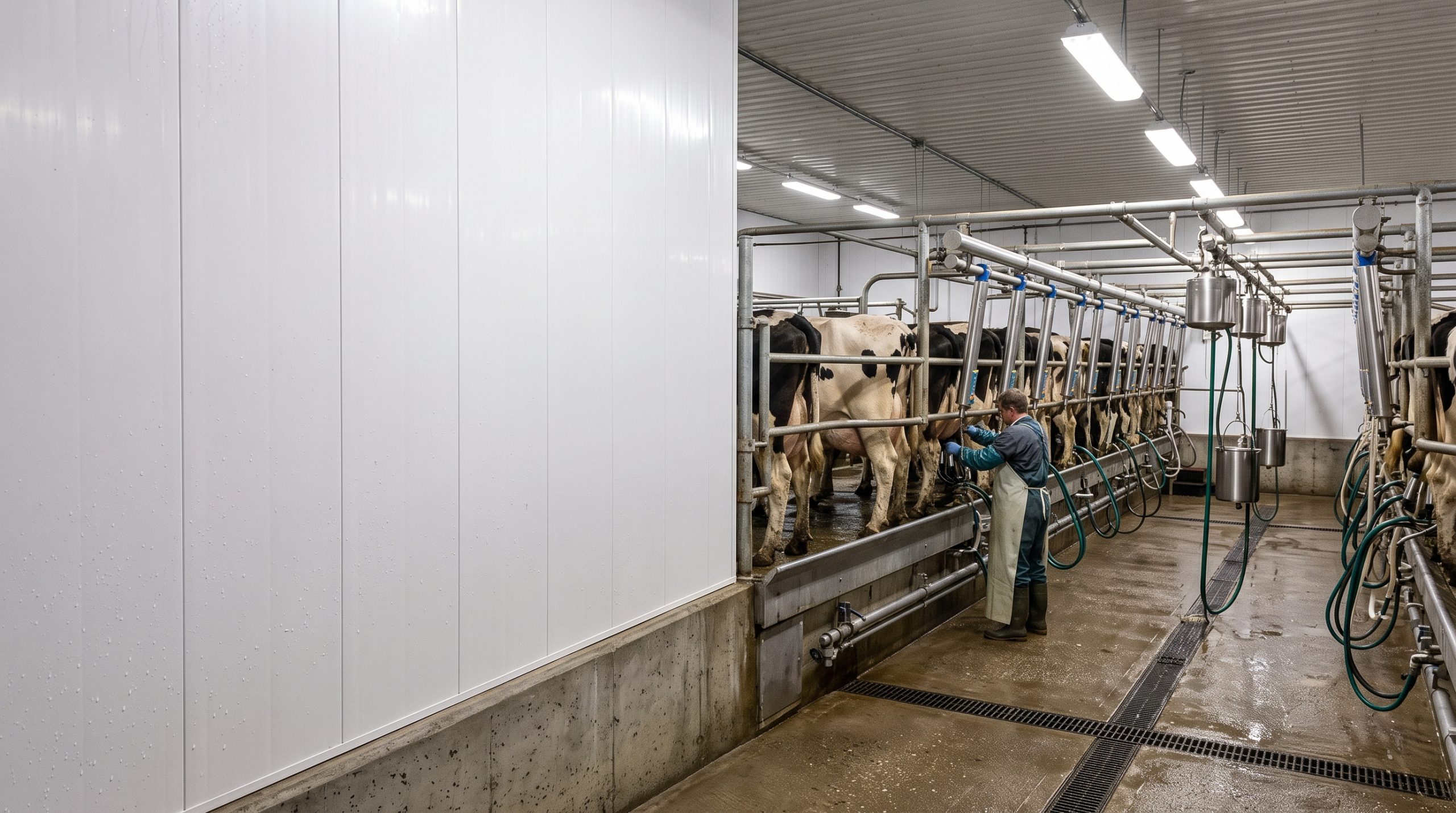
FRP vs PVC Wall Panels for Dairy Facilities

FRP vs PVC for Dairy Facilities at a Glance

Moisture Resistance Resistant to moisture; performance depends on the complete installed system and backer board Product-specific; 100% water-resistant systems directly block moisture penetration
Washdown Areas Commonly considered for wet commercial environments Suitable for high-pressure washdown environments depending on product specifications
Hygiene & Cleanability Cleanable surface; texture and trim joints can harbor residues over time Smooth, non-porous surfaces facilitate cleaning and reduce bacterial harboring
Chemical Resistance Resistance varies by resin type and panel thickness Resistance varies by formulation; high-grade vinyl resists standard sanitizers
Food Residue Surface texture and seams require careful routine maintenance Smooth, non-porous surface facilitates quick routine removal of fats and proteins
Mold & Mildew Moisture management behind wood/OSB backers remains critical Biological and moisture-resistance claims depend on substrate-free design
Impact Resistance High strength and impact durability depending on thickness Durable impact performance engineered for commercial utility spaces
Installation Requires adhesives, trim strips, fasteners, and moisture-resistant backer board Direct-to-stud or mechanical fastening with tongue-and-groove interlocking seams
Maintenance Requires routine cleaning and regular seam/caulk inspection Simple washdowns; no backer rot or caulked seam degradation
Long-Term Value Lower material cost, but requires ongoing seam repair and backer replacement risks Higher initial material investment offset by lower installation labor and maintenance
Best Applications Facilities where traditional FRP is specified and dry backers can be maintained Washdown-heavy, high-moisture processing and packaging environments

What Are FRP Wall Panels?

FRP stands for Fiberglass-Reinforced Plastic. It is a composite wall panel manufactured by embedding glass fiber strands into a polymer resin matrix (typically polyester or vinyl ester). The result is a lightweight, rigid sheet with high structural integrity and surface impact resistance.
Construction and Common Utility
FRP panels are widely specified across commercial and industrial spaces, including commercial kitchens, restrooms, healthcare facilities, and food storage areas. They provide a durable protective barrier over structural walls and resist surface scratching.
Typical Dairy Processing Applications
In dairy processing environments, FRP is historically selected for milk handling rooms, packaging lines, and cold storage areas where hard-wearing, scrubbable walls are needed.

Typical FRP Installation Method

Traditional FRP installation is a multi-step process:
  • Substrate Requirements FRP panels are thin (typically 0.090” thick) and flexible, requiring a solid backing wall such as green board, water-resistant drywall, or OSB/plywood.
  • Adhesive Application A full-spread, water-resistant trowelable adhesive is required over the entire backer board.
  • Trims & Moldings Panels are positioned with expansion gaps between them, covered by division bars (H-molds), end caps (J-molds), and corner trims.
  • Seam Sealing Joints must be carefully caulked with silicone sealant to prevent water intrusion behind the panels.
FRP Wall Panels

Cleaning and Maintenance Considerations
While the panel surface is washable, traditional embossed FRP finishes can trap food residues, fats, and grease. Routine maintenance requires detailed cleaning of trimmed seams and periodic re-caulking to maintain water tightness.

What Are PVC Wall Panels?

PVC (Polyvinyl Chloride) wall panels are extruded wall cladding engineered from high-grade vinyl resins. Unlike thin composite sheets, commercial PVC wall systems like Duramax PVC Panels feature a structural, hollow-core webbed design or solid rigid structure made from 100% virgin vinyl.

Key Characteristics

  • 100% Waterproof Construction Completely impervious to water, steam, and condensation.
  • Hygiene & Smooth Finish Smooth, non-porous finish prevents food particles, proteins, and milk fats from sticking.
  • Interlocking Tongue-and-Groove System Fastens directly to wall studs or existing wall assemblies without backer board or surface-applied trowel adhesives.
  • Chemical & Mold Resistance Unaffected by commercial detergents, sanitizers, mold, or bacteria.
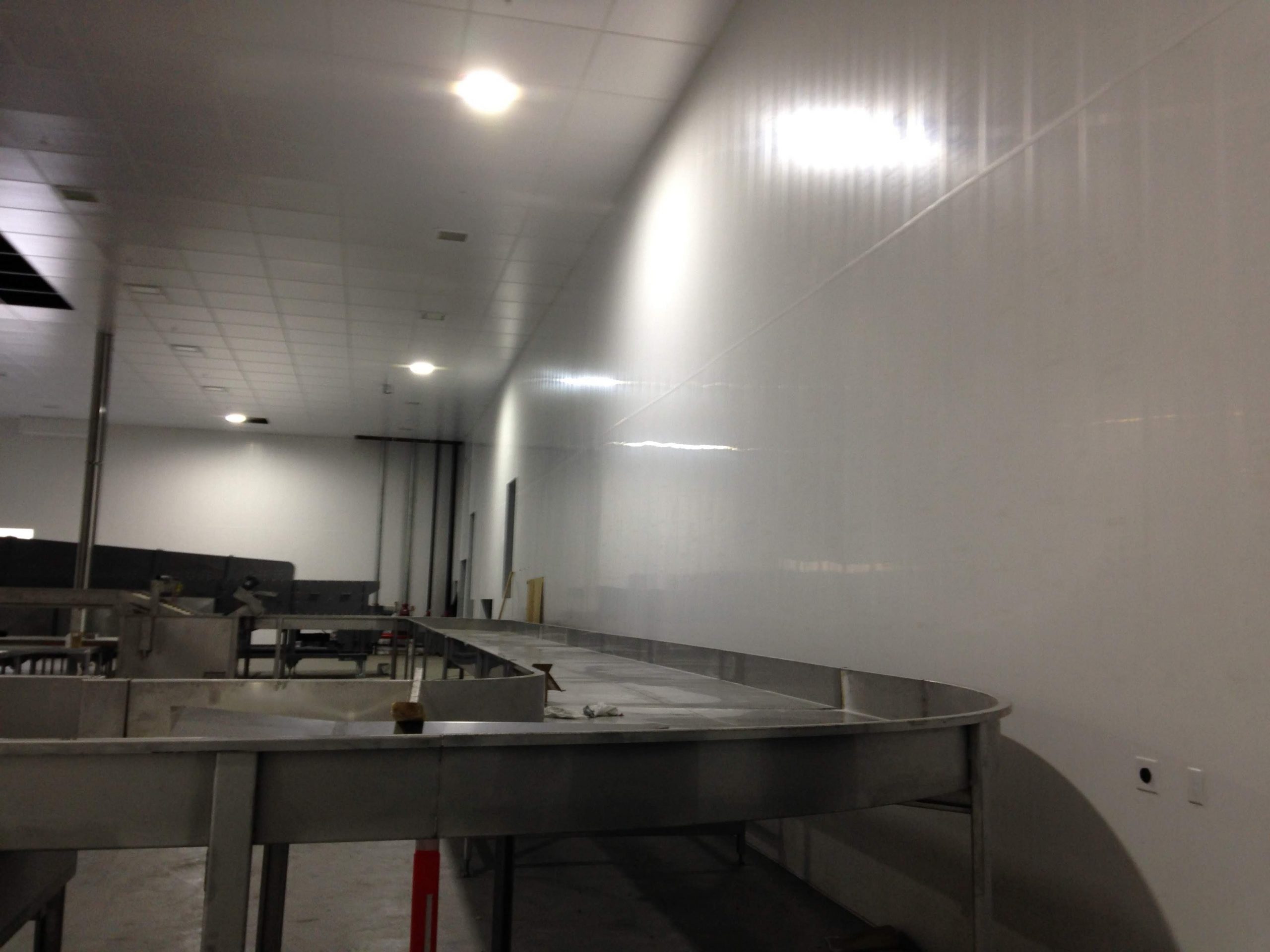
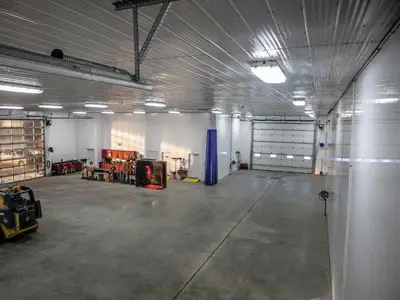
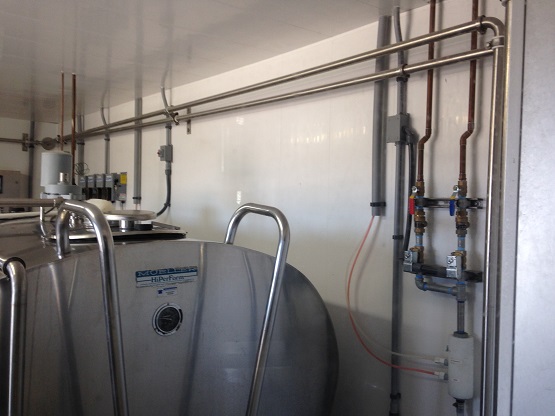
PVC Wall Panels

Duramax PVC wall panels are designed specifically to eliminate traditional backer board failure, providing a long-term wall system for wet environments. Learn more by reviewing the official Duramax PVC Product Specifications.

Get a Free Sample

FRP vs PVC: Installation in Dairy Facilities

Dairy facilities feature extensive wall areas subject to demanding washdown schedules, making efficient installation critical to overall project timeline and budget.

VS

FRP Installation

Installing FRP requires careful coordination:

  • ✓ Substrate Preparation: Wall framing must be fully covered with drywall or OSB backer board.
  • ✓ Measurement & Cutting: Panels are cut using specialized masonry/shears with protective gear to manage hazardous fiberglass dust.
  • ✓ Adhesive Application: Heavy adhesive is applied evenly across the backer board using a notched trowel.
  • ✓ Placement & Rolling: Panels are pressed into the adhesive and set with a heavy roller to eliminate air pockets.
  • ✓ Trim Integration: PVC or aluminum division bars and corner trims are slid onto edge boundaries.
  • ✓ Seam Caulking: Silicone is applied inside trims and exposed seams.
  • ✓ Curing Period: Adhesive must fully cure before exposure to high moisture or washing.

PVC Installation (Duramax System)

Duramax PVC panels utilize a streamlined, mechanical installation method:

  • ✓ Substrate Preparation: Can be installed directly over exposed wall studs, ceiling joists, or existing solid substrates without backer board.
  • ✓ Cutting: Easily cut using standard woodworking tools (circ-saw, handsaw) without creating hazardous fiber dust.
  • ✓ Fastening: Panels feature a hidden lip along one edge. Corrosion-resistant fasteners anchor the panel directly through the lip to studs.
  • ✓ Interlocking System: The adjacent panel slides into the tongue-and-groove joint, concealing all fasteners.
  • ✓ Corner & Edge Profiles: Snap-in base profiles and finished corner trims provide a clean perimeter.
  • ✓ Sealing: Minimal silicone sealant is required only along perimeter transitions or ceiling/floor joints.

Which System Is Faster to Install?

Backer Board Needed Yes (Plywood/OSB/Drywall required) No (Installs directly to studs or wall)
Adhesive Required Yes (Full-spread trowel adhesive) No (Direct mechanical fastening)
Fastener Visibility N/A (Relies on adhesive/rivets) Hidden within tongue-and-groove interlocking lip
Cutting Hazard Requires dust mask/respirator for fiberglass dust Standard non-hazardous woodworking cut
Cure Time 24–48 hours for adhesive set Immediate utilization post-fastening
Labor Requirement Typically 2-person installation crew 1 to 2 installers; reduced labor hours

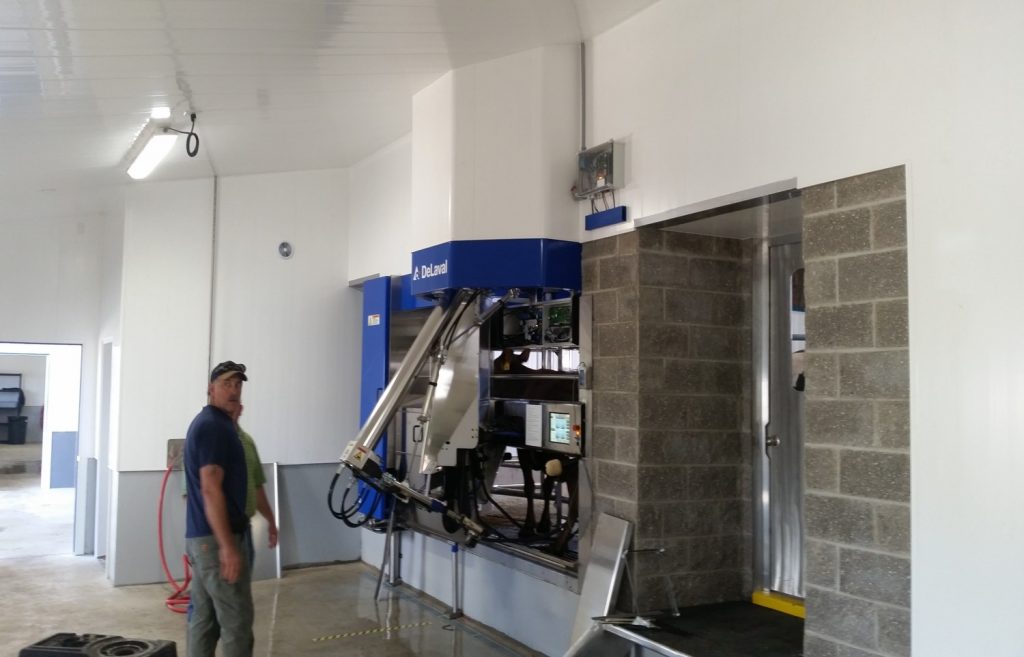
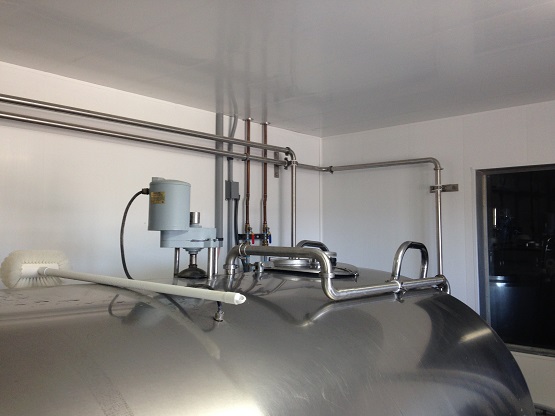
Because Duramax PVC panels eliminate backer boards and adhesives, installation labor times are significantly reduced compared to traditional FRP systems.
View Warranty Volume Pricing Request

Cleaning & Hygiene in Dairy Facilities

Dairy processing plants handle raw milk, cream, whey, cheese, and yogurt, exposing wall surfaces to fats, proteins, organic acids, water, high-pressure hot washdowns, and sanitizing chemicals.

Which Is Easier to Clean: FRP or PVC?

  • FRP (Textured Surface) Traps milk proteins and fats, requiring more intensive scrubbing. Trim seams and caulking can degrade over time, creating potential bacteria harbor points.
  • PVC (Smooth Surface) Non-porous surface repels residues for quick pressure washdowns. Flush seams created by the interlocking design form a seamless, sanitary wall surface.
  • Surface Smoothness Traditional FRP features a pebble-grain or textured finish. While impact-resistant, these surface crevices trap airborne milk fats and proteins. Duramax PVC panels feature a smooth, non-porous finish where residues wash away effortlessly.
  • Joint Design FRP uses raised H-mold trims and silicone seams that can trap organic debris and deteriorate over time under high-pressure cleaning. Interlocking PVC panels form a tight, flush seam that resists moisture and dirt buildup.
  • Sanitary Compliance Duramax PVC panels feature non-porous surfaces that prevent organic absorption, helping facilities maintain strict sanitation standards.
Cleaning & Hygiene in Dairy Facilities

Moisture, Condensation & Washdown Resistance

High-volume dairy production involves daily hot-water washdowns, high humidity, and continuous ambient steam.

FRP Performance

FRP panels are water-resistant. However, because they are glued over OSB or drywall, any compromise in seam sealant allows moisture to seep behind the panel. Over time, trapped water rots the underlying substrate, leading to panel delamination, bubbling, and hidden mold growth.

PVC Performance

Duramax PVC wall panels are 100% waterproof. Because they do not require backer boards, water cannot enter or rot an organic substrate. The non-porous vinyl material does not absorb moisture, swell, peel, or delaminate even when exposed to direct, daily high-pressure washdowns.

Chemical Resistance in Dairy Facilities

Clean-In-Place (CIP) processes and wall sanitation routines in dairy plants rely on powerful chemical solutions, including:

  • Alkaline detergents (caustic soda formulations for fat removal)
  • Acidic descalers (phosphoric or nitric acids to remove milk stone)
  • Sanitizers (peracetic acid, quaternary ammonium compounds, chlorine bleach)

Product-Specific Chemical Evaluation

Both vinyl formulations and fiberglass resin matrices offer strong chemical resistance. However, chemical resistance depends on chemical concentration, fluid temperature, exposure duration, and facility cleaning protocol.

Duramax PVC panels are engineered from high-purity virgin vinyl that resists organic acids, alkalis, and sanitizing solutions commonly used in dairy washdowns without staining, yellowing, or surface degradation.

Dairy-wall-panels

Durability & Maintenance

  • FRP System: Maintains initial integrity early on, but caulk wear over time can lead to substrate rot and delamination risk.
  • Duramax PVC System: Maintains initial integrity and retains its smooth finish and waterproof structure over long-term exposure.
  • Impact Resistance: Both FRP and PVC are designed to withstand structural impacts from light rolling equipment, crates, and personnel traffic.
  • Scratching & Staining: Duramax PVC panels feature a solid, color-fast composition. Scratches do not expose a contrasting base material or fiberglass fibers.
  • Long-Term Joint Maintenance: FRP requires ongoing inspection and re-caulking of all trims every 1–3 years to maintain water tightness. Interlocking PVC panels eliminate continuous caulk maintenance along vertical panel seams.

FRP vs PVC Cost for Dairy Facilities

Evaluating panel systems based solely on sheet material pricing provides an incomplete financial picture. Total cost analysis must account for substrate material, adhesives, trims, fasteners, labor hours, and ongoing long-term maintenance.

Total Installed Cost Breakdown

Raw Panel Cost Moderate (Lower upfront sheet cost) Moderate to Premium upfront sheet cost
Substrate / Backer Board Required (Adds 30/sheet) Not Required (Saves material cost)
Adhesive / Trowels Required (40 per panel coverage) Not Required
Fasteners & Trims Trim moldings + caulking tubes Direct stainless screws + starter trim
Labor Hours High (Multi-step process, cutting, gluing) Reduced (Direct fastening, fast interlocking)
Maintenance & Repairs Periodic caulk repair & backer replacement Minimal wipe-down / wash maintenance
Total Lifetime Cost Higher due to initial labor & future repair Lower due to fast labor & permanent durability

What Affects the Cost of Dairy Facility Wall Panels?

Facility Size & Wall Height

Larger rooms benefit significantly from fast-install interlocking panels.

Existing Wall Condition

If existing walls are damaged, PVC can span over open framing or uneven surfaces without installing new drywall first.

Corners & Penetrations

Complex layouts with multiple doorways and equipment pipe penetrations require accurate trim estimation.

Local Labor Rates

High regional contractor rates make fast-install PVC systems more cost-effective overall.

FRP vs PVC Installation Differences

Substrate Preparation Requires smooth, flat, dry backer board Mounts over open studs or existing wall structures
Cutting Tools Shears or carbide saws; generates dust Standard wood saw blades; clean edge cutting
Adhesive Requirements Full-spread water-resistant adhesive None required
Panel Joining External H-mold division strips Concealed tongue-and-groove interlock
Corner Finishing Inside/outside corner trim moldings Matching PVC perimeter/corner trim profiles
Seam Treatment Continuous silicone bead caulking Interlocking design; minimal perimeter sealant
Installation Speed Moderate to Slow (Multi-stage process) Up to 2x faster than multi-layer FRP installation
Installer Experience Requires familiarity with spread adhesives & FRP trims Standard commercial carpentry/contractor skills
Final Inspection Inspect adhesive bonds, bubbles, and caulk line integrity Inspect mechanical fasteners, interlock engagement, and edge trim

Fire Rating & Code Requirements

Commercial dairy processing plants are governed by local building codes, life-safety standards, and industrial fire prevention regulations.

Fire Performance & Safety Classifications

  • ASTM E84 Testing: Duramax PVC panels are tested in accordance with ASTM E84 testing procedures and carry a Class A Fire Rating.
  • Flame & Smoke Metrics: Duramax panels feature low Flame Spread Indexes (Index ≤ 25) and controlled Smoke Developed Indexes to comply with commercial building envelope codes.
  • Building Code Compliance: When installed over approved fire-rated wall assemblies (such as 5/8" Type X gypsum board structures), Duramax PVC panels provide a hygienic wall surface while maintaining overall assembly compliance.

Note: Always consult local fire marshals and building code officials regarding specific equipment heat clearances and localized fire assembly requirements.

Food Safety & Regulatory Considerations

Dairy plants operate under stringent inspection standards set by federal, state, and local regulatory bodies.

  • FDA Compliance:: Non-porous surface safe for indirect food contact and satisfies FDA requirements for food-processing environments.
  • CFIA Acceptance:: Certified and accepted for use in Canadian Food Inspection Agency-regulated facilities.
  • ASTM Certified:: Engineered to strict material and strength standards.
  • Hygienic Design:: Smooth, non-absorbing surfaces resist biological growth and withstand routine sanitation without material degradation.
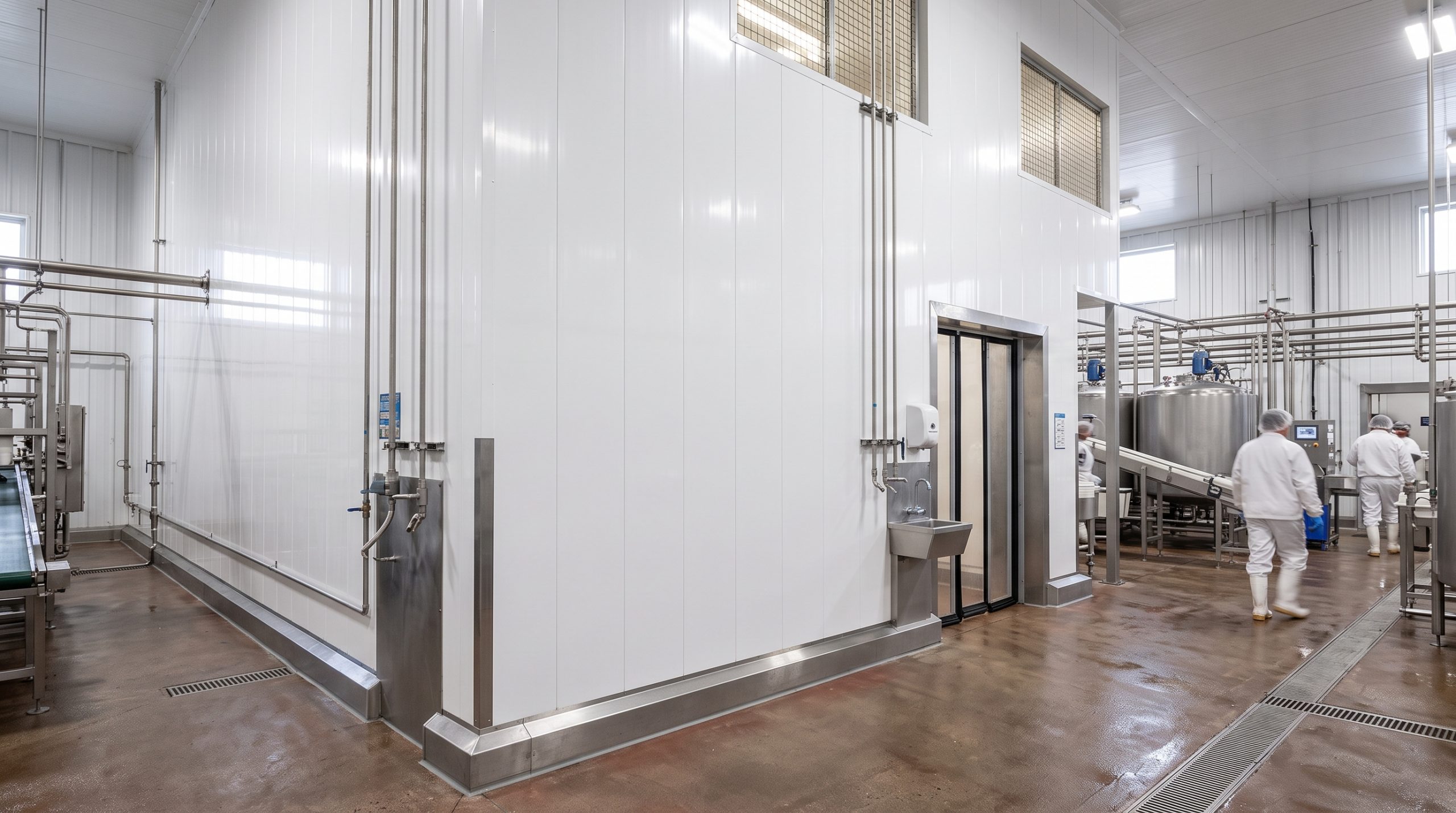
Dairy processing facility

Where Are FRP and PVC Panels Used in Dairy Facilities?

Milk Processing Areas High cleanability, moisture resistance, continuous sanitation Smooth PVC or seamless sealed wall cladding
Cheese Processing Areas Resistance to acidic whey, high steam, frequent washdown PVC wall systems eliminate backer board decay
Yogurt Production Acid resistance, smooth non-porous hygienic surfaces Non-porous PVC panels eliminate crevice residue
Packaging Areas High durability, low-maintenance, clean appearance FRP or PVC panels depending on wall backing
Washdown Bays Direct high-pressure water and chemical exposure 100% waterproof direct-to-stud PVC panels
Cold Rooms & Walk-ins Temperature stability, condensation protection Verify exact thermal/panel expansion gap specs
Dry Storage Areas Scuff resistance, basic cleanability Standard FRP Cladding or PVC Wall Panels
Sanitation Rooms Strong chemical resistance to concentrated CIP agents Chemically tested virgin vinyl or resin panels

When Should You Choose PVC for a Dairy Facility?

PVC wall panels are worth evaluating when a dairy facility requires a durable, 100% waterproof wall surface that eliminates the risk of underlying backer board rot. For projects with demanding washdown schedules, tight construction timelines, or labor-saving priorities, a direct-fastener PVC system offers distinct operational advantages.

Why Dairy Facilities Choose Duramax PVC Panels

01.

Easy-to-Maintain Surface

Duramax panels feature a smooth, non-porous finish that repels fats, proteins, and milk stone. Walls wipe clean quickly or can be pressure-washed without damaging joints.

02.

Moisture-Resistant Construction

Manufactured from 100% virgin vinyl, Duramax wall panels are completely impervious to water, steam, and biological growth.

03.

Installation Advantages

By mounting directly to studs or ceiling joists using concealed fasteners, Duramax wall systems eliminate the need for OSB backer board, adhesive spread, and long curing periods.

04.

Durable Wall Protection

Designed with an internal webbed truss structure, Duramax panels deliver superior impact resistance against daily operational bumps and scrapes.

05.

Factory-Direct Supply & Project Support

Duramax provides factory-direct ordering across the United States, offering competitive project pricing, quick shipping timelines, and expert technical support.

  • Fast sample dispatch
  • Custom panel length options to reduce project waste
  • Dedicated project specialists for material estimates

Explore full product specifications on the official Duramax PVC Wall Panels Application Page.

FRP vs PVC for Dairy Facilities: Pros & Cons

VS

FRP Wall Panels

Pros:

  • Established traditional wall cladding material
  • High surface hardness and impact resistance
  • Widely available from distribution centers

Cons:

  • Requires OSB/drywall backing that can rot if exposed to water
  • Textured surface traps milk fats, proteins, and grease
  • Requires full adhesive spread and periodic re-caulking of seams
  • Generates hazardous fiber dust when cut on site

PVC Wall Panels (Duramax)

Pros:

  • 100% waterproof; installs directly to studs without backer board
  • Smooth, non-porous finish facilitates quick pressure washing
  • Tongue-and-groove interlocking system speeds up installation labor
  • FDA-compliant, CFIA-certified, and Class A Fire Rated

Cons:

  • Higher initial material sheet cost compared to basic unbacked FRP sheets
  • Requires verification of thermal expansion gaps in extreme temperature spaces

FRP vs PVC Wall Panels for Dairy Facilities: Which Is Better?

There is no single wall-panel material that is automatically right for every dairy facility. FRP and PVC systems should be evaluated based on the facility’s cleaning procedures, moisture exposure, chemical use, temperature conditions, installation requirements, fire-rating requirements, applicable regulations and total installed cost. For projects where a PVC system meets those requirements, Duramax PVC panels can be evaluated as an efficient alternative to traditional FRP.

FRP vs PVC Dairy Facility FAQs

Yes. PVC wall panels manufactured from virgin vinyl are 100% waterproof, non-porous, and FDA-compliant, making them suitable for high-moisture, hygienic dairy processing environments.

Yes. FRP panels have traditionally been specified in food processing plants. However, because they are typically glued over backer board, moisture must be strictly controlled to prevent substrate rot and delamination.

Interlocking PVC wall panel systems are generally better suited for continuous washdown bays because they mount directly to wall studs without moisture-sensitive backer boards or exposed caulked seams.

High-grade PVC wall panels are highly resistant to standard alkaline detergents, acid descalers, and sanitizers used in dairy washdown protocols. Always verify specific chemical concentration and temperature limits with technical documentation.

Yes. Frequent washdowns, steam, and high humidity require wall materials that resist moisture absorption, preventing hidden mold and structural degradation.

While raw FRP panels may have a lower initial sheet price, PVC wall systems often cost less to install overall because they eliminate backer board, trowel adhesives, and extensive labor hours.

In most applications, yes. PVC wall panels satisfy FDA hygienic criteria, meet Class A fire ratings, and offer equal or superior moisture protection. Always check project specifications and local codes before substituting.

Duramax PVC panels feature a concealed lip that fastens directly to wall studs or ceiling joists using corrosion-resistant screws. The panels interlock via tongue-and-groove joints, creating a smooth surface without visible fasteners.

PVC wall panels can be cleaned using standard low- or high-pressure water spray, mild commercial detergents, and approved dairy sanitizers. Their smooth, non-porous finish allows fats and proteins to wash away easily.

Key factors include moisture exposure levels, washdown frequency, chemical cleaner compatibility, hygienic standards (FDA/CFIA), fire rating requirements, installation speed, and total installed budget.

Planning a Dairy Facility Wall Project?

Compare your facility requirements with Duramax PVC wall panels and determine whether they are an appropriate alternative to traditional FRP for your application.

Have a question? Tell us how we can help.

First Name(Required)
Last Name(Required)
Drop files here or
Max. file size: 10 MB.
    This field is for validation purposes and should be left unchanged.

    GET A SAMPLE

    Before You Go!

    Need help choosing the right PVC panels? Leave your details and our product specialist will contact you with the best recommendation.

    "*" indicates required fields

    This field is for validation purposes and should be left unchanged.

    Save & Share Cart
    Your Shopping Cart will be saved and you'll be given a link. You, or anyone with the link, can use it to retrieve your Cart at any time.
    Back Save & Share Cart
    Your Shopping Cart will be saved with Product pictures and information, and Cart Totals. Then send it to yourself, or a friend, with a link to retrieve it at any time.
    Your cart email sent successfully :)