SIMPLY FILL OUT THE FORM AND WE’LL SEND a Vinyl panel YOUR WAY
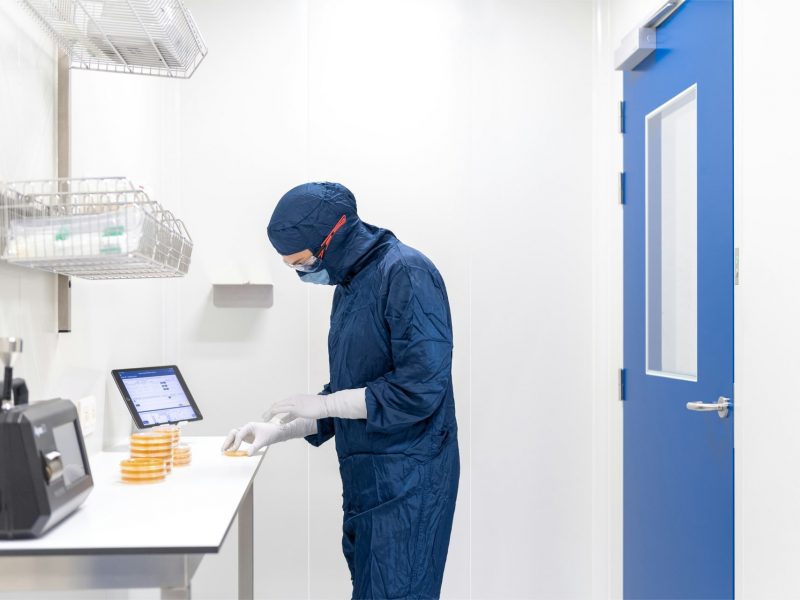
Get a Free SampleAre you wondering what can go wrong in maintaining a hygienic environment in your cleanroom? Most cleanroom owners or managers focus only on air filtration and strict operating procedures while ignoring the walls. Yes, you heard it right: the walls. A cleanroom can’t afford walls that simply look clean. For pharmaceutical manufacturers, medical facilities, laboratories, food processors, and other controlled environments, wall surfaces are constantly exposed to moisture, cleaning chemicals, spills, dust, and repeated sanitation. And when those surfaces absorb moisture, develop cracks, or become difficult to clean, they can create places where contaminants collect. PVC cleanroom panels address several of these challenges and are designed for demanding environments.
Practical Features That Make PVC Panels Ideal For Controlled Environments
Have a look at how PVC panels support hygiene and contamination control, making for a suitable solution for your cleanroom and simplifying long-term facility maintenance:
Non-Porous Surfaces Leave Fewer Places for Contaminants to Hide
Porous wall materials, such as drywall and wood-backed FRP panels, absorb moisture and retain contaminants beneath the surface. And with moisture getting into a wall system, drying and cleaning become more difficult.
PVC panels have a non-porous surface that prevents moisture from seeping in. The panels also do not require additional backer boards, eliminating the risk of moisture accumulation behind them. The interlocking design of the panels further contributes to a crevice-free finish, preventing contaminants from hiding or mold buildup.
Smooth Walls Make Routine Cleaning Easier
Cleanrooms require regular cleaning and sanitation. The cleanroom walls are wiped down frequently or subjected to more intensive cleaning procedures, as per the facility’s schedule. PVC panels are a practical choice because:
- The smooth surface makes cleaning easier, as there are fewer surface irregularities for dirt and residue to accumulate on.
- They are stain-resistant, so operators do not need to scrub them as rigorously as they would on textured surfaces.
- The chemical resistance of the panels further ensures that the panels do not deteriorate or fade from the use of cleaners and sanitizers.
Fewer Weak Points Can Support Contamination Control
In conventional cleanroom wall panels, joints, corners, edges, penetrations, and transitions deserve special attention and maintenance. Poorly finished joints can create narrow areas where dust, moisture, or residue accumulates, while damaged edges can create another maintenance headache.
PVC panels offer fewer weak points, as their tongue-and-groove interlocking design not only simplifies installation but also ensures a watertight and seamless surface. Factor in perimeter trims for installation and silicone sealant for high-moisture environments, and you get a smooth, easy-to-maintain wall assembly with fewer exposed areas that can interfere with cleaning.
Durability Matters in High-Use Cleanrooms
Cleanroom interiors have to deal with daily wear from equipment and cart movement, workers handling materials, and cleaning crews repeatedly working against the same surfaces. Traditional wall finishes chip, crack, or deteriorate easily, becoming harder to sanitize and requiring frequent repairs that interrupt normal operations.
PVC panels offer a durable wall-covering option. They are ½” thick and are engineered with a unique inner webbed truss design that disperses the impact energy across the surface and prevents damage. Their resistance to moisture and routine wear can help maintain a cleaner, more consistent wall surface over time.
PVC Cleanroom Panels vs. Traditional Wall Finishes: How They Perform In Controlled Environments
| Requirement | PVC Cleanroom Wall Panels | Conventional Wall Finishes |
| Moisture resistance | High | Varies |
| Surface porosity | Non-porous | Mostly porous |
| Routine cleaning | Easy | Requires more attention and time |
| Mold-related concerns | Seamless and watertight finish minimizes the risk | Prominent joints and crevices allow mold and mildew buildup |
| Maintenance | Relatively low | Higher |
| Resistance to frequent washdowns | Withstands pressure wash and chemical washdowns | Vulnerable to repeated cleaning |
The table highlights why PVC modular cleanroom wall panels are often preferred for demanding and controlled environments. Their smooth, moisture-resistant surface supports easier cleaning, minimizes mold-friendly areas, and handles frequent washdowns. Compared with conventional finishes, PVC can also reduce maintenance requirements while providing a more durable and hygienic wall surface.
Questions People Ask About PVC Cleanroom Panels
1. Are PVC cleanroom wall panels easy to clean and sanitize?
Yes. PVC cleanroom wall panels have a smooth, non-porous surface that can be easily wiped and disinfected. Their moisture resistance also makes them suitable for environments requiring frequent cleaning and washdowns. It is recommended to verify that the panel is compatible with the specific disinfectants and cleaning chemicals used in your facility to ensure long-term performance.
2. How do PVC cleanroom wall panels help prevent contamination?
PVC panels help reduce contamination risks by providing a seamless, watertight surface that doesn’t absorb moisture or contaminants. They also come with an antibacterial coating that prevents bacterial infestation and keeps contamination at bay.
3. Are PVC wall panels suitable for pharmaceutical and other controlled environments?
PVC panels are suitable for pharmaceutical, biotechnology, food-processing, healthcare, and laboratory environments. They are CFIA and FDA-compliant, with cleanability, chemical resistance, and a Class-1 fire rating.
Invest in Duramax PVC Panels For Hygienic And Contamination-Free Cleanrooms
A cleanroom wall should work quietly in the background and not become another problem for your facility team. PVC panels are built for environments where cleanliness, durability, and day-to-day efficiency have to work together. Their practical design helps create a wall system that stays easier to manage as cleaning schedules, production demands, and facility traffic increase.
Choosing the right panels is ultimately about making the cleanroom easier to operate over the long term. Explore Duramax, one of the leading cleanroom panel suppliers, for ASTM-certified PVC panels that support stringent hygiene practices while reducing maintenance needs. Our panels are available nationwide at factory-direct prices and backed by a limited lifetime warranty. Request a free consultation for your project today!
Duramax PVC Panels vs FRP – Key Advantages
No Mold, No Rot: Unlike FRP, Duramax PVC Panels won’t support mold or mildew growth.
Easy Installation: Interlocking design means no backer boards, no glue, and no extra labor.
100% Waterproof: PVC panels are completely water-resistant, ideal for high-moisture areas.
Low Maintenance: No peeling, bubbling, or cracking—just wipe clean with ease.
Cost-Effective Over Time: No need for replacement or repainting like with FRP.
Certified Performance You Can Trust

ASTM Certified: Tested for strength, durability, and environmental performance.
FDA-Compliant: Safe for use in food-processing and sanitary environments.

Class A Fire-Rated: Designed with fire safety as a top priority.

Made in the USA: Quality assured, with faster delivery and dependable service.
Related Blogs
- PVC Panels Offer Easy Cleanroom Maintenance That Saves Your Time
- The Reason Why Duramax Cleanroom Walls Are Reliable & Right
- PVC Cleanroom Walls Focus On Better Hygiene And Saves Remarkably
- PVC Cleanroom Walls-Durable And Hygienic Solution for Every Cleanroom
- Are Duramax Cleanroom Walls Proven To Be Better Than FRP?
Recent Blogs
- Dealing With Mold Buildup In Dairy Facilities? Invest In Dairy Viny...
- Planning to Upgrade Worn-Out Horse Riding Stable Walls? Install Ea...
- Millie’s Home Bakery Reduced Maintenance Needs By Switching To PVC ...
- Top Applications Of Commercial Vinyl Wall Covering in 2026
- Vinyl Walls for Cleanrooms-Everything You Need to Know Before Choo...
Place your order – Request for a quote:
Duramax panels are ASTM-certified, FDA-compliant, quality-checked, Class A fire-rated per ASTM E84, and chemical-resistant.
As a trusted wall panel supplier in the USA, Duramax makes it easy to get started. Request a free sample, book a free consultation, or get your quote today.
Have a question? Tell us how we can help.
Sign up for updates and news