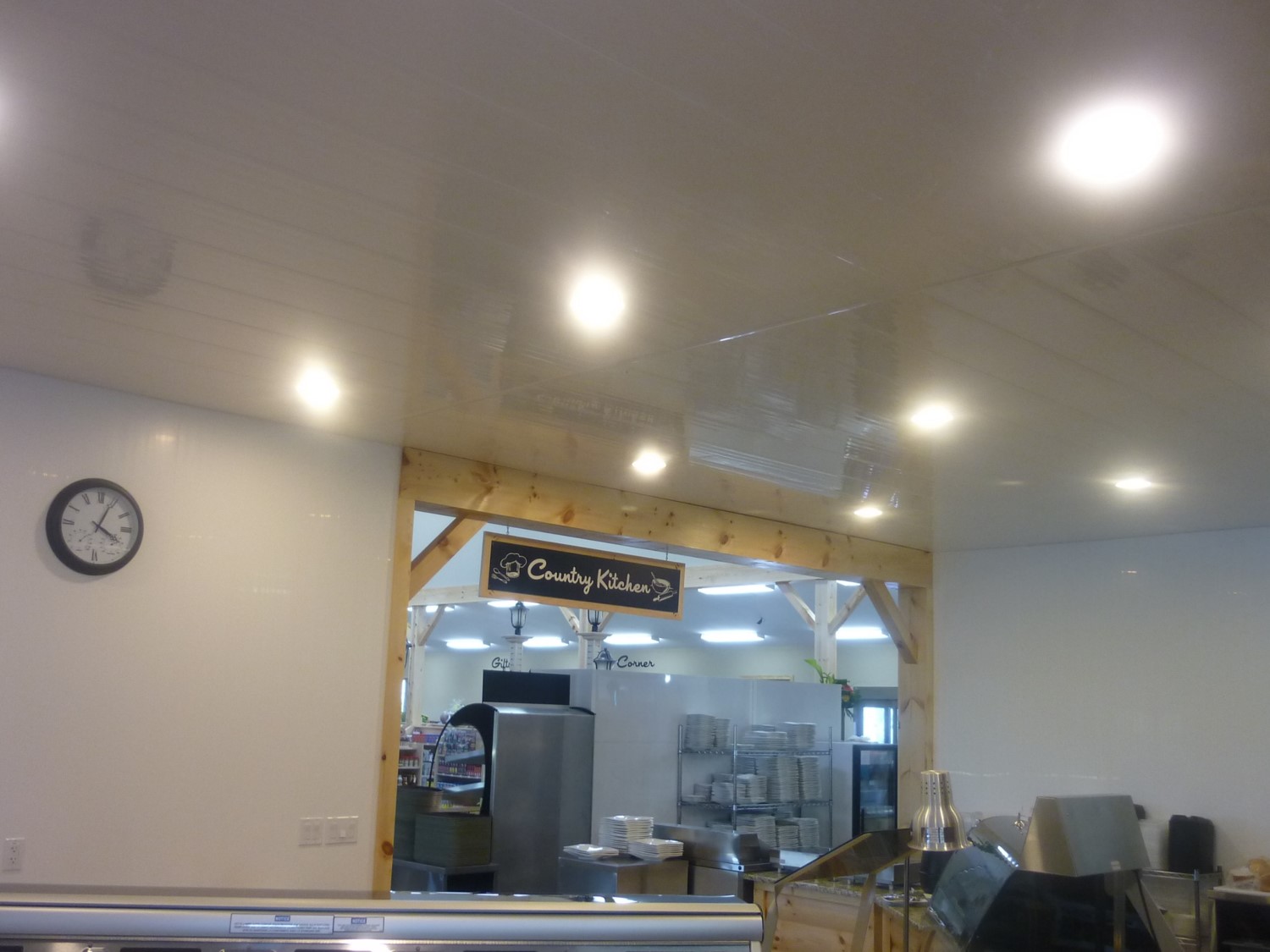
SIMPLY FILL OUT THE FORM AND WE’LL SEND a Vinyl panel YOUR WAY
Get a Free SampleCommercial kitchen walls take a daily beating from sudden moisture spikes, flying heavy pans, and end-of-shift intensive washdowns. Drywall crumbles when exposed to moisture, ceramic tile grout attracts pathogens, and FRP delaminates when water compromises the underlying wooden substrates. Selecting industrial kitchen wall systems is a critical decision that directly impacts regulatory compliance, labor efficiency, and long-term facility overhead.
Among the paneling options on the market, vinyl panels are the industry standard for high-volume commercial kitchens. Engineered to withstand severe environmental degradation, vinyl panels address the structural failure points of traditional wall materials.
Here are the primary advantages of integrating vinyl panels in high-traffic commercial kitchen environments.
1. Moisture Resistance that Prevents Wall Degradation
During daily washdowns, water doesn’t merely splash against the walls. It creates continuous hydrostatic pressure that actively drives moisture to seep through the surface, forming micro-fissures. Materials that rely on surface sealants gradually weaken when exposed to moisture. For instance, FRP panels have a porous finish that traps moisture behind thin plastic sheets. The OSB backers or plywood attached to the plastics turn into saturated sponges that rot within months of heavy operational use.
Durable vinyl commercial kitchen wall panels eliminate the structural vulnerability with their moisture-resistant property. They are built with a tongue-and-groove interlocking system that creates a sealed, watertight surface. As a result, moisture cannot penetrate the walls and reach the underlying substrate. The walls remain protected against moisture infiltration, ensuring clean, dry commercial kitchen interiors.
2. Support Antimicrobial Commercial Kitchens
Regulatory bodies such as the FDA and CFIA mandate wall surfaces that actively prevent cross-contamination. This is a critical requirement for commercial kitchens to maintain health code compliance and protect kitchen staff.
Microorganisms require two conditions to thrive in an environment: trapped moisture and organic nutrients. Porous tile grout lines become a sanctuary for Listeria, Salmonella, and Mold spores. Besides, degraded drywall provides the cellulose organic material mold needs to feed and grow.
PVC panels feature a vinyl composition that provides no nutritional value to fungi, mildew, or mold. Their smooth, non-porous surfaces feature seamless interlocks that leave no microscopic voids or grout joints where microbes can accumulate.
3. Chemical Resistance Against Industrial Sanitizers
Daily sanitation protocols in food preparation areas rely on heavy-duty sanitizers. This includes chlorinated degreasers, ammonium compounds, and concentrated caustic solutions. Over time, these aggressive agents cause paint to blister and plastics to embrittle and yellow. Vinyl wall and ceiling panels are highly resistant to commercial cleaning solvents. This resists color fading and wall delamination, maintaining structural integrity through years of multi-shift cleaning cycles.
4. High Mechanical Impact-Resistance
The rear line of a busy commercial kitchen is an active collision zone. Heavy stainless prep tables, hot-holding carts, and garbage cans regularly strike wall surfaces. Ceramic tiles shatter upon sharp impacts, creating hazardous razor edges. FRP wall panels crack or bend, breaking the top water seal layer. Vinyl wall panels are engineered with an inner webbed truss design that resists mechanical impacts across the panels. These sturdy wall panels resist surface cracking and warping, maintaining an intact barrier against daily surface wear.
5. Direct-to-Stud Installation That Reduces Downtime
Facility downtime during renovations or repairs results in lost revenue. Ceramic tiles require multi-day processes involving tile setting, grouting, and curing. FRP requires applying adhesive evenly across a flat drywall backer and sealing the trim. This process is highly prone to adhesive failure in the presence of humidity.
Vinyl wall panels attach directly to the studs using standard fasteners concealed within the interlocking lip. These lightweight wall materials cover a significant amount of square footage quickly. Since they fasten quickly, they reduce facility downtime from weeks to days during retrofits.
Real-World Operational Impact-How Duramax Vinyl Panels Benefit Industrial Kitchen Retrofit
Problem
Feast Fables is a high-volume catering unit operating in a 12,000 sq ft facility in Los Angeles. Over the years, FRP panels have shown signs of deterioration around its automated rack-washing stations. Moisture had penetrated behind the FRP trims, causing the OSB boards to swell and produce a foul odor. Persistent exposure to moisture caused wall delamination and mold growth behind prep lines.
Solution
The commercial kitchen operators had to choose between re-sheeting the area with new FRP and replacing the damaged section with vinyl panels. The maintenance team had come across Duramax vinyl panels known for their combined moisture resistance, durability, and long-lasting performance. They decided to install Duramax vinyl commercial kitchen wall covering, which yielded immediate operational benefits.
Result
- Rapid Retrofit
The demo and installation of Duramax vinyl panels was completed during a scheduled 48-hour weekend shutdown. This prevented interruption to weekday commercial kitchen operations.
- Simplified Sanitation
Sanitation staff reported a 30% reduction in end-of-night wall cleaning time. The high-pressure hot-water washdowns no longer required manual scrubbing.
- Inspection Reliability
The facility passed subsequent health inspections with zero violations, eliminating the risk of restaurant shutdown.
Your Queries Are Answered Here
1. Are Vinyl Panels Compliant with Strict Food Safety Regulations?
Yes. High-quality vinyl panels undergo rigorous quality inspections to meet strict FDA and CFIA regulations. They are non-porous wall materials engineered to pass stringent public health inspections.
2. What is the Fire Rating of Vinyl Panels?
Commercial-grade vinyl panels like Duramax carry a Class A fire rating under ASTM E84 testing. This means vinyl panels exhibit low flame spread and smoke development for commercial building interiors.
3. How to Clean Vinyl Panels?
Vinyl panels are easy to clean due to their smooth and non-porous finish. You can gently clean panels with a quick wipe-down or pressure wash using mild cleaners. The simplified cleaning saves you time and effort.
The Duramax Difference
Duramax is a prominent name in the USA known for manufacturing vinyl industrial kitchen wall systems. Duramax vinyl panels are FDA-compliant and are backed by a limited lifetime warranty. They are available in customized lengths of 8, 10, 12, 14, 16, and 20 ft.
We ship vinyl panels to your location within two weeks. Visit our website and request a free project consultation to learn more.
Duramax PVC Panels vs FRP – Key Advantages
No Mold, No Rot: Unlike FRP, Duramax PVC Panels won’t support mold or mildew growth.
Easy Installation: Interlocking design means no backer boards, no glue, and no extra labor.
100% Waterproof: PVC panels are completely water-resistant, ideal for high-moisture areas.
Low Maintenance: No peeling, bubbling, or cracking—just wipe clean with ease.
Cost-Effective Over Time: No need for replacement or repainting like with FRP.
Certified Performance You Can Trust

ASTM Certified: Tested for strength, durability, and environmental performance.
FDA-Compliant: Safe for use in food-processing and sanitary environments.
Class A Fire-Rated: Designed with fire safety as a top priority.

Made in the USA: Quality assured, with faster delivery and dependable service.
Related Blogs
Recent Blogs
- How Vinyl Wall Panels Help Simplify Commercial Bathroom Wall Maint...
- Does Moisture-Proof Wall Paneling Reduce Repair and Maintenance Costs?
- How Do Garage PVC Wall Panels Compare To Traditional Wall Panels?
- What Are The Hidden Disadvantages Of FRP Wall Panels?
- FRP vs PVC Panels-Which is the Right Fit for Modern Commercial Kit...
Place your order – Request for a quote:
Duramax panels are ASTM-certified, FDA-compliant, quality-checked, Class A fire-rated per ASTM E84, and chemical-resistant.
As a trusted wall panel supplier in the USA, Duramax makes it easy to get started. Request a free sample, book a free consultation, or get your quote today.
Have a question? Tell us how we can help.
Sign up for updates and news