SIMPLY FILL OUT THE FORM AND WE’LL SEND a Vinyl panel YOUR WAY
Get a Free SampleCommercial facilities need low-maintenance, long-lasting wall paneling solutions to meet the versatile needs of their spaces. For example, walls in a commercial kitchen are exposed to grease, steam, and constant cleaning. Grow rooms also operate in high-humidity conditions, while animal facilities must contend with moisture, odors, impacts, and frequent washdowns. In these environments, the wall isn’t simply a background surface. It becomes part of the facility’s maintenance, sanitation, and operating costs. That is one reason PVC wall panels are increasingly being specified as an alternative to traditional paneling solutions. Their combination of moisture resistance, cleanability, durability, and relatively straightforward installation makes them suitable for demanding commercial environments.
Here are a few industries making the switch for improved productivity.
Commercial Kitchens and Restaurants: PVC Panels Make Cleaning Easy
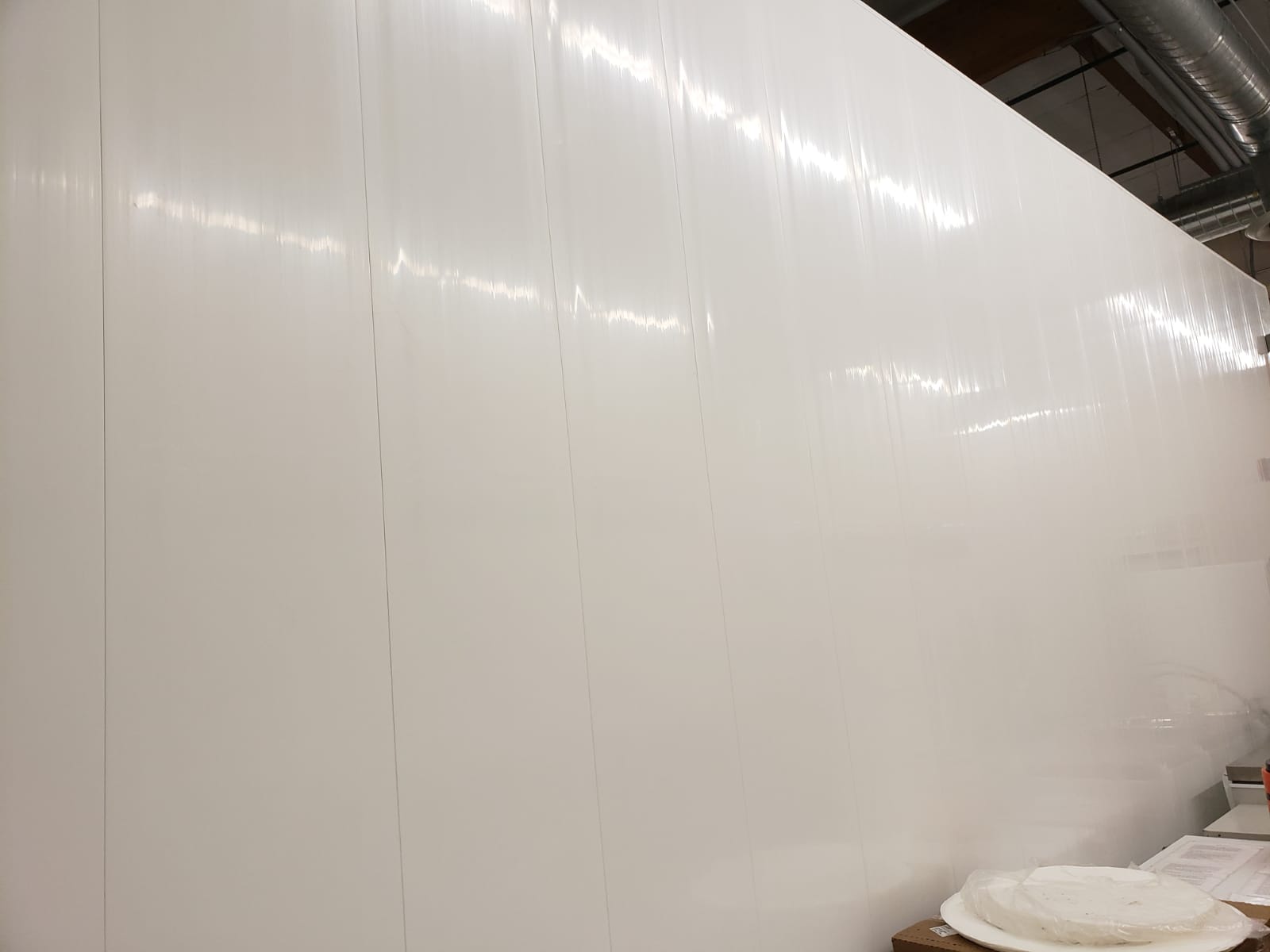
Commercial kitchens are among the most demanding environments for wall materials. Traditional drywall can absorb moisture if its protective finish is compromised. Tile provides a durable surface, but grout lines can add another cleaning and maintenance concern. FRP can also rot and promote mold buildup. PVC panels offer a non-porous, washable surface that is suitable for areas where moisture and sanitation are daily concerns. They are available with interlocking systems that create a cleaner wall surface with fewer exposed joints. For restaurant operators, the ease of cleaning with a wipe-down or pressure wash effectively saves time and expenses.
Food Processing and Packaging Facilities: PVC Panels Meet Strict Hygiene Standards
Food processing plants have little room for wall materials that absorb moisture, deteriorate quickly, or are difficult to clean. Meat processing, seafood, dairy, beverage, and food packaging facilities often combine water, chemicals, temperature changes, and strict sanitation procedures. PVC panels are increasingly used in these spaces because they are CFIA and FDA-compliant and can be washed and maintained as part of the facility’s sanitation routine. Duramax, for example, documents food-processing applications in which PVC panels were selected specifically because liquid resistance and contamination control were major considerations.
Car Washes and Garages: PVC Panels Prevent Moisture-Related Damages
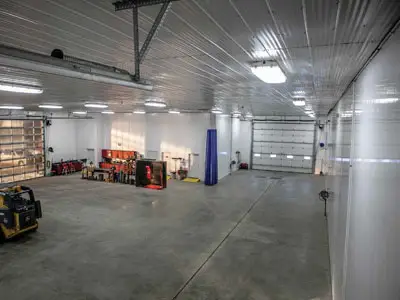
A car wash may be one of the clearest examples of why conventional wall materials struggle. Water repeatedly hits the walls, while soap, cleaning chemicals, dirt, and pressure washing add additional stress. Any wall system that absorbs water or requires frequent repairs can become a maintenance problem. PVC wall panels are well-suited to these conditions and create a bright, uniform interior that is easier to maintain than painted drywall.
Grow Rooms: PVC Panels Ensure A Reflective Surface
Grow rooms create a different kind of challenge: sustained humidity and a need for a bright environment. High humidity can cause problems for drywall, wood, and other moisture-sensitive materials. Once moisture gets into a wall system, mold, deterioration, and maintenance issues can follow. PVC panels provide a non-porous surface that doesn’t absorb water like conventional porous wall materials. Their smooth surface further distributes light evenly, creating a bright environment that supports photosynthesis.
Cleanrooms, Healthcare and Sanitation Areas: PVC Panels Feature A Watertight Finish
Cleanrooms and healthcare-related utility spaces place a premium on cleanable surfaces. Walls need to withstand frequent cleaning while minimizing areas where dirt and moisture can accumulate. PVC panels interlock with a tongue and groove mechanism for a watertight finish that supports rigorous cleaning programs rather than making it harder. They are chemical-resistant and do not deteriorate from the use of chemicals and sanitizers.
Case Study: Replacing Traditional Wall Materials in a Food Processing Plant
A useful example comes from Adrian’s Fresh Meats, a food processing operation in Holcomb, Kansas. The facility needed wall protection for meat-processing activities, where liquids were unavoidable and maintaining a clean environment was essential. The project covered approximately 1,536 square feet and used panels from Duramax PVC panel suppliers.
The challenge
Meat processing creates a combination of moisture and sanitation demands. Walls need to remain cleanable while handling regular exposure to liquids. Using a conventional wall finish could create more maintenance work if moisture reached vulnerable areas or if the surface became difficult to clean.
The solution
PVC wall panels were selected for the processing plant because they offered a moisture-resistant, easy-to-clean wall surface suited to the environment. The project demonstrates an important point about PVC paneling: the decision isn’t necessarily about replacing one sheet material with another. It’s about selecting a wall system based on the facility’s actual operating conditions.
The takeaway
For food processing operators, wall material can influence more than appearance. It can affect cleaning routines, maintenance requirements, durability, and the long-term condition of the interior. That same logic applies to commercial kitchens, car washes, grow rooms, dairy facilities, and other high-moisture environments.
Why Are Businesses Moving Away From Traditional Paneling?
The shift toward PVC isn’t happening simply because PVC is a newer material. It’s happening because facility owners are paying more attention to the total cost and performance of a wall system. PVC panels can address several common facility concerns:
- Moisture resistance: Useful in wet and high-humidity environments.
- Easy cleaning: Smooth surfaces can simplify routine washdowns.
- Low maintenance: Less dependence on painting and repeated surface repairs.
- Durability: Designed for demanding commercial and industrial applications.
- Installation efficiency: Interlocking panel systems can simplify installation.
- Hygiene: Non-porous surfaces can be advantageous in sanitation-sensitive areas.
- Versatility: Suitable for industries ranging from food processing to agriculture.
PVC Wall Panels Are Becoming a Practical Alternative
The biggest change isn’t that traditional materials have disappeared. Drywall, FRP, tile, and other systems still have their place. The change is that facility owners now have more reasons to look beyond the conventional choices. Where moisture, frequent cleaning, hygiene, and maintenance are major concerns, PVC wall panels offer a practical alternative to traditional paneling. That’s why they continue to gain attention across commercial kitchens, food processing plants, car washes, grow rooms, agricultural facilities, cold storage, breweries, and animal facilities.
For a facility manager planning a renovation, the better question is “Which wall system will continue to perform after years of cleaning, moisture, traffic, and everyday use?” That shift in thinking is helping PVC panels become the most demanding solution for commercial spaces. Buy PVC wall panels from Duramax at factory-direct prices. Ask for a free sample now!
Duramax PVC Panels vs FRP – Key Advantages
No Mold, No Rot: Unlike FRP, Duramax PVC Panels won’t support mold or mildew growth.
Easy Installation: Interlocking design means no backer boards, no glue, and no extra labor.
100% Waterproof: PVC panels are completely water-resistant, ideal for high-moisture areas.
Low Maintenance: No peeling, bubbling, or cracking—just wipe clean with ease.
Cost-Effective Over Time: No need for replacement or repainting like with FRP.
Certified Performance You Can Trust

ASTM Certified: Tested for strength, durability, and environmental performance.
FDA-Compliant: Safe for use in food-processing and sanitary environments.

Class A Fire-Rated: Designed with fire safety as a top priority.

Made in the USA: Quality assured, with faster delivery and dependable service.
Related Blogs
- How Do Duramax PVC Wall Panels Solve Common Wall Challenges in Bre...
- Showroom Quality on the Shop Floor: Why Dealerships are Upgrading t...
- Transform Your Office Space with Duramax PVC Panels
- Why Duramax PVC Panels Are the Best Choice for Cleanrooms
- Why Duramax PVC Panels are the Ultimate Choice for Your Constructio...
Recent Blogs
- FRP vs PVC Panels-Which is the Right Fit for Modern Commercial Kit...
- How Nina’s Garage Makeover With Commercial PVC Wall Panels Helped R...
- Can PVC Kennel Wall Panels Reduce Maintenance Costs?
- Clara’s Cannabis Business Spiked Profit As Grow Room Vinyl Panels S...
- Duramax Vinyl Panels for Car Washes- Where Protection Meets Perform...
Place your order – Request for a quote:
Duramax panels are ASTM-certified, FDA-compliant, quality-checked, Class A fire-rated per ASTM E84, and chemical-resistant.
As a trusted wall panel supplier in the USA, Duramax makes it easy to get started. Request a free sample, book a free consultation, or get your quote today.
Have a question? Tell us how we can help.
Sign up for updates and news