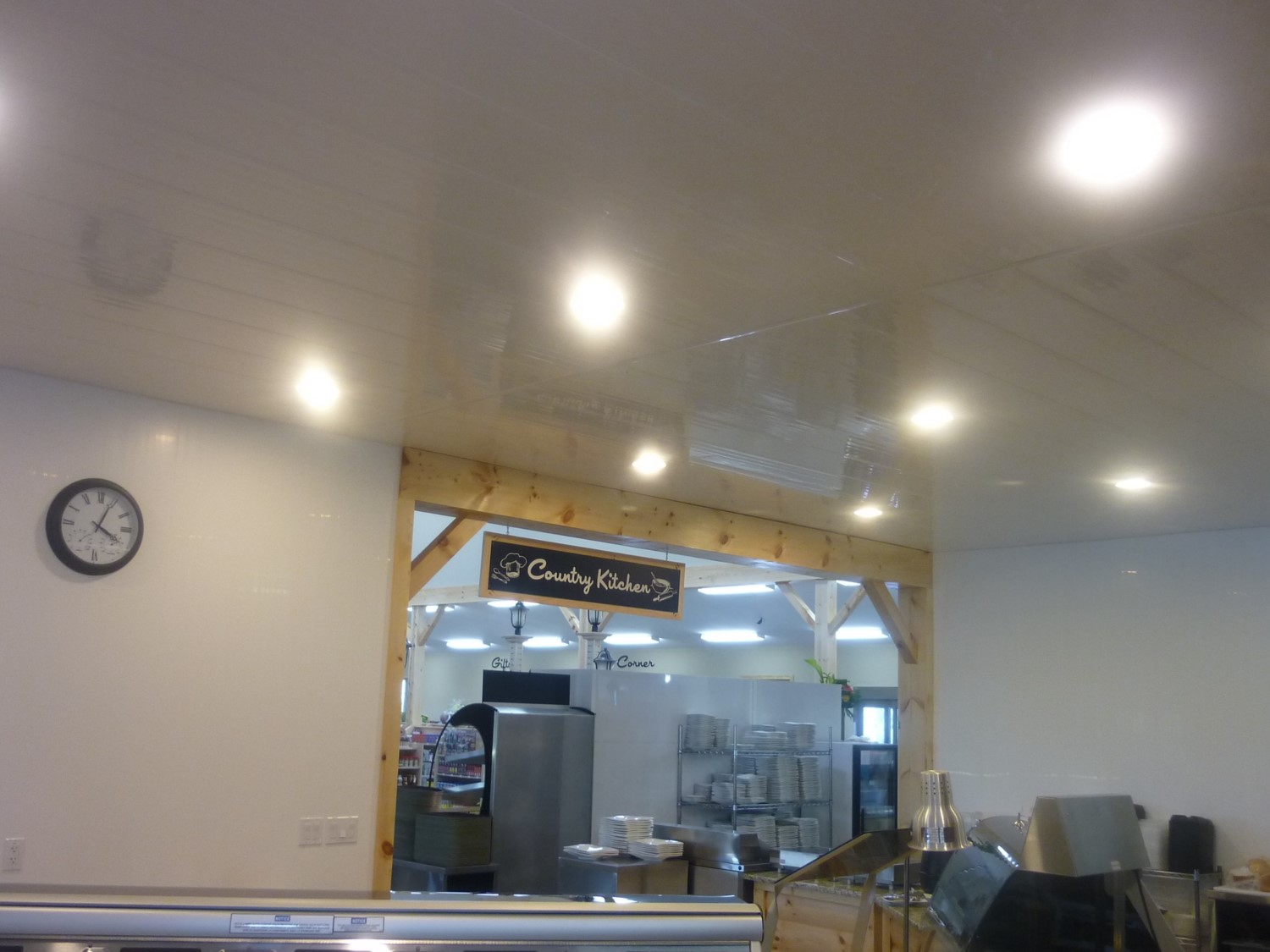
SIMPLY FILL OUT THE FORM AND WE’LL SEND a Vinyl panel YOUR WAY
Get a Free SampleStandard wall coverings can undermine the cleaning protocols in a food preparation facility. While stainless steel prep tables and floor drains get the most attention, interiors absorb the brunt of airborne grease, steam, and food splatter, making sanitation difficult. Health inspectors scrutinize every square inch of a culinary workspace, as porous walls or peeling paint quickly trigger costly violations and operational shutdowns. Upgrading to vinyl industrial kitchen wall systems is no longer a luxury for modern foodservice operators. It is an essential component that determines food safety and regulatory compliance.
Why Is Commercial Kitchen Hygiene Hard to Maintain?
Commercial spaces, such as kitchens, experience some of the brutal environmental conditions that degrade wall finishes like drywall, FRP, and ceramic tile. Dishwashers and industrial cooking equipment generate heavy condensation inside the culinary space. Over time, moisture penetrates microscopic cracks in painted surfaces. This results in flaking and structural rot behind the scenes.
Ceramic tile paves the way for cleanliness concerns because of the presence of grout lines. Grout is porous, which acts like a sponge for liquefied fats and organic food particles. Once bacteria and mold spores settle into grout joints, surface wiping fails to sanitize them. This results in unpleasant odors and cross-contamination. Heavy rolling carts and dropped cookware chip tiles, creating crevices that trap debris and harbor pathogens. Keeping these traditional surfaces clean requires labor-intensive scrubbing with harsh caustic chemicals, which damage the wall substrate and drive up upkeep costs.
Vinyl Panels-A Quick Overview
Vinyl commercial kitchen wall panels are crafted from 100% virgin polyvinyl chloride designed for interior wall and ceiling protection. These panels feature an internal webbed truss design that provides rigidity while remaining remarkably lightweight. They feature interlocking tongue-and-groove edges that slide together over existing drywall or studs. Rather than relying on surface coatings that wear away, the material maintains a uniform, solid composition throughout its entire thickness. This architectural system creates a protective barrier across commercial interiors without requiring complex framing or specialized masonry skills. Whether you are building a new room or retrofitting an existing space, vinyl panels meet or exceed your expectations. A perfect alternative to FRP, tiles, and drywall, vinyl panels maintain structural resilience without compromising on safety and hygiene.
Vinyl Panels-Built for Hygienic Commercial Kitchens
Transitioning from traditional FRP to PVC cladding directly resolves the sanitation bottlenecks found in busy culinary environments. Several distinct material properties make these panels exceptionally hygienic. This includes-
- Zero-Grout and Interlocking Design
Unlike ceramic tiles that rely on porous cementitious joints, vinyl panels lock together via tight tongue-and-groove edges. This eliminates the tiny crevices where grease, grime, and microorganisms typically accumulate, leaving a smooth surface across the entire wall.
- Non-Porous Surface
PVC panels do not absorb water, oils, or food acids due to their non-porous finish. Water cannot penetrate the substrate, preventing the damp internal environments required for mold, mildew, and fungal growth.
- Chemical and Stain Resistance
Sanitation needs potent degreasers and bleach solutions. Vinyl wall panels withstand exposure to cleaning agents without discoloring, warping, or degrading. This allows staff to sanitize walls seamlessly without damaging the finish.
- Scratch Durability
The internal truss design of vinyl panels absorbs heavy impacts from utility carts and kitchen equipment without cracking or chipping. This helps prevent new bacterial hiding spots from forming over years of heavy use.
Case Study
Problem
Harborview Culinary Commissary is a 6,500-square-foot meal-prep facility in Los Angeles. Previously, it dealt with cleanliness issues due to failing FRP panels and moldy grout in its main cooking and warewashing zones. Steam from kettles had weakened the adhesive behind the existing FRP boards. Walls started to bubble, separate, and trap stagnant water. Weekly deep-cleaning shifts involved four staff members working overnight with stiff brushes and harsh solvents. Black mold continued to reappear along the baseboards.
Solution
Facility management decided to strip the damaged surfaces and retrofit the entire prep and dishwashing areas with Duramax PVC Commercial Kitchen Wall Covering. They fastened it directly to the wall framing without requiring adhesives or taping. Contractors completed the installation over a single weekend and avoided weekday production downtime.
Result
Harborview reduced its wall cleaning hours by 60% after choosing Duramax. Staff could easily clean the surfaces at the end of each shift. Six months later, a municipal health inspection found zero sanitation concerns, and there were no recurring wall repair costs.
Common Q/As
1.Can I Install Duramax Vinyl Panels over existing tile or drywall?
Yes, you can install Duramax PVC walls over the existing substrate. Their interlocking edges provide a uniform surface without calling for extensive demolition.
2.How do Duramax Vinyl Panels Compare to FRP in Commercial kitchens?
FRP requires messy adhesives that delaminate under high heat and humidity, and it relies on exposed plastic seam strips that collect dirt. Duramax Vinyl Panels install seamlessly without the need for glue. They feature tongue-and-groove joints and offer far greater impact resistance than thin FRP sheets.
3.Are Vinyl Panels Easy to Maintain
Yes. Vinyl panels are easier to maintain compared to FRP and drywall. They have smooth, crevice-free surfaces that make cleaning easier with a soft cloth and mild washing cleaners. This saves you time and effort over time.
Choose Duramax Vinyl Panels for a Clean and Hygienic Commercial Kitchen
Duramax introduces vinyl industrial kitchen wall systems that are built to last for a decade. These lightweight wall materials meet FDA and CFIA standards. Duramax Vinyl Panels are ½ inch thick and 16 inches wide, and can be customized in 8, 10, 12, 14, 16, and 20 ft lengths. We ship vinyl panels to your destination within two weeks. Book your free project consultation now.
Duramax PVC Panels vs FRP – Key Advantages
No Mold, No Rot: Unlike FRP, Duramax PVC Panels won’t support mold or mildew growth.
Easy Installation: Interlocking design means no backer boards, no glue, and no extra labor.
100% Waterproof: PVC panels are completely water-resistant, ideal for high-moisture areas.
Low Maintenance: No peeling, bubbling, or cracking—just wipe clean with ease.
Cost-Effective Over Time: No need for replacement or repainting like with FRP.
Certified Performance You Can Trust

ASTM Certified: Tested for strength, durability, and environmental performance.
FDA-Compliant: Safe for use in food-processing and sanitary environments.

Class A Fire-Rated: Designed with fire safety as a top priority.

Made in the USA: Quality assured, with faster delivery and dependable service.
Related Blogs
- Understanding the Benefits of Vinyl Wall Panels for High-Use Commer...
- From FRP to Duramax PVC Panels: Why Is Commercial Kitchen Design C...
- 7 Benefits of Installing PVC Industrial Kitchen Wall Systems
- PVC Industrial Kitchen Wall Systems Or Traditional FRP: Which Is Be...
- PVC Industrial Kitchen Wall Systems Are A Valuable One
Recent Blogs
- Planning A Commercial Interior Upgrade? Invest In PVC Industrial In...
- From Mold-Prone Walls to Easy-Clean Dog Kennel Walls: A Kennel Upgr...
- How Do Duramax Vinyl Panels Support Long-Term Car Wash Performance?
- Why Are PVC Wall Panels Better Than Traditional Materials for Grow ...
- Why USA-Made PVC Panels Are a Smart Choice for Commercial Wall Prot...
Place your order – Request for a quote:
Duramax panels are ASTM-certified, FDA-compliant, quality-checked, Class A fire-rated per ASTM E84, and chemical-resistant.
As a trusted wall panel supplier in the USA, Duramax makes it easy to get started. Request a free sample, book a free consultation, or get your quote today.
Have a question? Tell us how we can help.
Sign up for updates and news